
"The ART of Listening"...
Forging a Rock Band's Professional Identity
The Archive of Music Sounds Institute (thearchiveofmusicsoundsinstitute.com) is a subsidiary of Classic Rock Turntables.com, Inc. (classicrockturntables.com), a registered NON Profit Corporation of the State of North Carolina.
The ASMI Introduction: Decoding the Architecture of Rock (1955–1984)
The history of Rock music is often taught as a simple timeline of names and dates. But for the serious musician and the dedicated listener, that "biographical" approach fails to explain the adaptation of Sounds that occurred between 1955 and 1984. During the Era of "Classic Rock," the electric guitar didn't just get louder... the very DNA of modern music was spliced and re-coded through a series of high-friction of Fusion and Crossovers
The ASMI "Art of Listening" program was created to move beyond the surface-level labels of streaming algorithms. We recognize that the "Classic Rock Era" was defined by a specific tension: the struggle between the Primitive Pulse of the street and the Architectural Sophistication of the studio.
To facilitate the ability to help Wannabe Bands and Artists master their basket of Sounds, we have created 6 categories of Sounds that are intended to represent the full capabilities of their "Theme"... or if they chose to do "Crossover " Sounds.
These categories exist because a "Genre" is just a name, but a Category is a blueprint of Sounds. By isolating these six paths, we allow the student to identify the Hierarchy of Elements—whether the song is being driven by the "Wall of Sound" (Timbre), the "Pocket" (Rhythm), or the "Labyrinth" (Form).
Our framework addresses the "Crossover" of sounds... the moments where the Blues refused to stay simple, where Country borrowed the "Growl" of the amplifier, and where Jazz stepped out of the conservatory to reclaim the "Lust for Gold."
The ASMI Categories of Intent:
The Primitive Pulse: The raw, binary heartbeat of the 1950s.
The Electric Scream: The era where the Instrument became the Protagonist.
The Narrative-Acoustic Hybrid: The servant-leader of the Lyric and Story.
The Architectural Labyrinth: The studio-born rejection of the predictable.
The Interlocking Grid: The science of syncopation and the "Gap."
Blazz Rock: The sophisticated fusion of Blues-grit and Jazz-intellect.
By mastering the Art of Listening through these six lenses, we stop being "Wannabe" observers and start being Musical Architects. We don't just hear the song; we see the friction that created it. This is the ASMI "Mission": to prove that while the "Classic Era" ended in 1984, the blueprints it left behind are the keys to the future of the "Hand of Man" in music.
The Program... 6 Individual Sessions per year
We have divided our Sessions in to 6 classifications of Classic Rock music sounds:
1. Guitar Rock: Guitar as band leader, hero, and sonic weapon.
Guitar Rock is essentially music sounds where the electric guitar is the "boss," acting as the engine that drives the entire song. Instead of the guitar just sitting in the background, it takes center stage by playing "riffs"—a catchy, repetitive rhythmic pattern that you can hum just like a vocal melody.
Its signature sound comes from "crunchy" or distorted tones that create a thick, powerful "wall of sound" that feels physically heavy and high-energy. In this category, the guitar often has a back-and-forth conversation with the singer, switching between steady, driving rhythms and soaring solos that act like a second voice, making the whole track feel loud, gritty, and exciting.
Note: Guitar Rock is the loosest category and will allow full crossover sounds from the other 5.
Program 1: Guitar Rock (Acoustic/Electric)
The Focus: This path treats the guitar as the identity of a track—a lineage of sound that defines a Band's entire sonic universe.
The "Listening" Lesson: Bands train to distinguish Saturation (electric's dense, amplified wall of tone) from Resonance (acoustic's pure, room-filling vibration). It's the study of how a single string can command space, mood, and memory.
Guitar Rock isn’t a subgenre—it’s a revolution in sound. It traces the electric guitar’s ascent from humble rhythm keeper to commanding lead voice, crowning it the frontman of the modern band. Defined by amplification, articulation, and raw attitude, Guitar Rock channels primal emotion through distortion, bending tone into unmistakable identity.
The Acoustic Guitar:
Far from a sidekick, it provides crucial counterpoint—raw clarity, texture, and dynamic breath amid electric storm. Pioneers like Eric Clapton (Guild F-50 on Cream’s Badge) and Jimmy Page (Martin D-28 on Led Zeppelin’s Stairway to Heaven, Goin’ to California) redefined its rock role, weaving folk intimacy into epic fury for builds that still haunt. From Byrds jangle to Eagles hybrids like Hotel California, it bridges eras, moods, and volumes—proving unplugged power rivals any amp stack.
The Crossover: Bands map how one guitar shifts across rock’s sungenres—blues bite, folk shimmer, punk snarl, metal crush. They emerge wielding both as emotional cores: riffs and fingerstyles that feel inevitable, a tone palette that owns any mix—professional, personal, versatile, unstoppable.
The Electric Guitar:
Here is the outline of how wood and wire evolved into the "Saturated Sounds" of voice of Rock Music in the modern era.
The path from “wood and wire” to the saturated voice of rock is a story of three converging evolutions: the guitar’s body (from hollow to solid), the amp’s behavior (from clean to overdriven), and outboard electronics (from fuzz accidents to deliberate pedals).
From Hollow Boxes to Solid Bodies
Early electric guitars were simply acoustic boxes with pickups, and they howled with feedback as bands got louder. Inventors like George Beauchamp answered this with the 1931 Rickenbacker “Frying Pan,” a lap steel whose pickup sensed string vibration directly, pointing the way to solid designs.
By mid‑century, the Fender Telecaster (1950 Esquire/Tele) and Gibson Les Paul brought true solid‑body mass and metal hardware, which resisted feedback and let players attack the strings harder without the whole body exploding in howl. This shift made the guitar a controllable, sustain‑rich lead voice instead of a fragile rhythm box.
Turning Amps Up Past “Clean”
The first tube amps were designed for clean volume, not dirt; companies like Fender sold “loud undistorted power” for big‑band and country players. But when small combos cranked these amps in clubs, the tubes and transformers clipped, adding upper harmonics and turning sine‑like fundamentals into richer, compressed, singing tones.
By the early 1950s, records like Howlin’ Wolf’s “How Many More Years” captured one of the first deliberate overdriven amp tones—simply by turning the gear up until it broke into musical saturation. This natural tube overdrive created the warm, singing edge that later rock players would chase as their basic language.
Happy Accidents: From Grit to Fuzz
Some of the earliest “saturated sounds” were pure hardware failure: torn speakers, loose tubes, and abused circuits. Willie Kizart’s amp on “Rocket 88” (1951) buzzed because the speaker cone was damaged, and Sam Phillips leaned into that fuzz rather than fixing it, setting a precedent that distortion itself could be the hook.
In 1958, Link Wray poked holes in his speaker on “Rumble,” deliberately mutilating his amp to get a raw, square‑wave‑like roar at controllable volume. These accidents taught engineers and players that clipping could be shaped—from softer, rounded overdrive to harsh, chainsaw‑like fuzz—by how the waveform’s peaks were flattened or squared.
Birth of Rock’s Saturated Lead Voice
Once solid‑body guitars and cranked amps met the youth backbeat of 1950s rock and roll, the electric guitar became the voice of the song, not just accompaniment. Players like Chuck Berry used bright, slightly overdriven tones to cut through bands, making riffs and double‑stops the “hook” equal to the vocal line.
By the mid‑1960s, British blues‑rock players were pushing this further: Eric Clapton’s 1966 sessions with a humbucker‑equipped Gibson Les Paul into a Marshall combo produced a thick, sustaining overdrive that many regard as a defining early “heavy” rock tone. Here, tube saturation and solid‑body sustain fused into a single, singing, vocal‑like line that guitarists could bend, hold, and scream with.
Pedals: Portable Saturation
Engineers soon bottled these broken and overdriven sounds into standalone boxes. The Maestro FZ‑1 Fuzz‑Tone (early 1960s) reproduced a defective preamp’s rasp, and Keith Richards’ use of it on “(I Can’t Get No) Satisfaction” made fuzz a mass‑market sound rather than a one‑off accident.
Later pedals like the Ibanez Tubescreamer mixed mild distortion with a midrange boost, letting players push already‑overdriven tube amps into richer saturation while keeping the guitar’s core identity intact. By the 1970s and 1980s, classic overdrives, fuzzes, and distortion boxes standardized several “flavors” of saturation that defined everything from blues‑rock to metal.
What “Saturated” Really Means Sonically
Technically, saturated rock tone is the sound of a guitar signal pushed until its waveform clips, enriching the harmonic spectrum and compressing dynamics. Soft, rounded clipping yields warm, singing sustain; harder, squarer clipping yields buzzy, aggressive textures.
In practical band terms, saturation lets a single guitar note feel larger than life: its harmonic content occupies more of the spectrum, so riffs and bends can stand toe‑to‑toe with drums and vocals without getting lost. That is how wood and wire, via solid bodies, hot amps, and clever pedals, transformed into the saturated “voice” that defines rock’s modern sound.
Timeline:
1. The “Pre‑Grit” Era (1931–1939)
The Problem – Too Quiet for Big Bands
In early 1930s swing orchestras, acoustic archtop guitars could not compete with brass, reeds, and drums, so they stayed in the rhythm section shadows. Even as players pushed heavier strings and bigger bodies, volume hit a hard ceiling before feedback and room noise took over.
The Solution (1931) – Rickenbacker “Frying Pan”
George Beauchamp’s Rickenbacker Electro A‑22 “Frying Pan” (developed 1931–32) was the first commercially successful electric lap steel, using a horseshoe‑magnet electromagnetic pickup to turn string vibration directly into an electrical signal. Designed for Hawaiian and related styles, it proved that magnetism plus steel strings could bypass the acoustic box and go straight into an amp for serious volume.
The Virtuoso (1936–1939) – Charlie Christian and the ES‑150
Gibson’s ES‑150 “Electric Spanish” model (introduced 1936) was the first widely successful hollow‑body electric, with a powerful bar pickup aimed squarely at jazz band use. When Charlie Christian joined Benny Goodman in 1939 with his ES‑150, his single‑note, horn‑like lines made the electric guitar a true lead voice in swing rather than just a chordal timekeeper.
The Impact – Lead Voice vs. Feedback Wall
Christian’s success proved that the electrified guitar could stand in the spotlight, phrasing like a sax or trumpet in front of a big band. But as bandstands got louder and amps were pushed harder, the hollow bodies themselves resonated, creating uncontrollable acoustic‑electronic feedback—the wrong kind of “friction” that would soon demand a new, more solid solution.
2. The Solid‑Body Revolution (1940–1954)
The “Log” (1940–1941): Les Paul’s Prototype
Les Paul built “The Log” around 1940–41 using a 4x4 pine block (with added hollow wings for shape) to eliminate body resonance and feedback while maximizing sustain through mechanical rigidity. He pitched it to Gibson and Epiphone, but they dismissed the solid‑body idea as unviable; still, it proved a dense wood core could deliver pure, endless note decay without acoustic interference.
The “Workhorse” (1950): Fender Broadcaster/Telecaster
Leo Fender’s Broadcaster (late 1949–early 1951, renamed Telecaster in 1951 due to Gretsch trademark) was the first mass‑produced solid‑body electric, with a slab ash body, bolt‑on maple neck, and single bridge pickup for a bright, cutting tone that sliced through country and R&B mixes. Affordable and road‑tough, it turned the guitar into a pro workhorse, free from hollow‑body fragility.
The “Refined Beast” (1952): Gibson Les Paul Goldtop
Gibson’s Les Paul Model (introduced summer 1952) brought a carved maple top on a thick mahogany slab, dual P‑90 pickups, and set neck for warm, thick sustain that became the blueprint for heavy rock tones. Weighing in at 9–10 pounds, its mass and wood combo delivered fat harmonics and compression, influencing blues and beyond.
The “Ergonomic Future” (1954): Fender Stratocaster
The Stratocaster (debut April 1954) added contoured double‑cutaway body, three staggered pickups for versatile tones, and synchronized “tremolo” (vibrato) bridge for fluid pitch bends and dive‑bombs. Its ergonomic design and “human cry” expressiveness set the stage for players like George Harrison and Jimi Hendrix to make the guitar sing with unprecedented vocal‑like control.
3. The "Hand of Man" and the Amplifier (1947–1955)
The amplifier era turned clean signal into the gritty "voice" of rock, as small tube amps—pushed to their limits in rowdy clubs—delivered the saturation that solid bodies were built to survive.
Small Valve Amps: The Volume‑to‑Grit Pipeline
Postwar combos like the Fender Tweed Deluxe (5E3 circuit, ~1947 onward) and early Bassman prototypes packed 15–30 watts into portable wood cabinets, designed for clean projection in country and jump blues. Cranked for club gigs against horns and drums, their 6V6 or 6L6 power tubes overloaded, clipping the signal into compressed harmonics—warm breakup at gig volume, not hi-fi sterility. This "hand of man" friction married solid‑body sustain, birthing a vocal‑like lead tone that cut without feedback.
The "Bug" Becomes a "Feature": Artists Reclaim Distortion
Engineers chased linearity (clean sine waves), but players like Willie Johnson on Howlin' Wolf's "How Many More Years" (1951, Chess) embraced tube saturation as expressive dirt—gritty, barking single notes that howled like a wired Delta wolf. The Rocket 88 accident (1951, torn speaker cone) sealed it: fuzzy buzz wasn't failure, but a riff‑carrying timbre. By 1955, Chuck Berry and others dialed grit deliberately—overdrive as the new baseline, no longer hushed mishap.
The 1955 baseline of Sounds
In 1955 Chess and Sun studios, the guitar's electrical baseline pulsed through compression and cut—three textures, each with distinct attack, sustain, harmonics, and volume fingerprints that turned wood into wired voice.
1. "Glassy" Snap (Fender/Tweed Edge)
Gear: Telecaster/Strat through overdriven Tweed Deluxe.
Attack: Razor-sharp percussive ping—immediate, stinging transient like a slapped pick on steel.
Sustain: Medium glued tail—compression evens the decay without bloom, keeping notes punchy.
Harmonics: Bright upper-mids sparkle (2–4kHz bite); minimal fizz, focused twang.
Volume: Piercing cut through mix—slices slap bass/drums without dominating.
Example: Chuck Berry, "Maybellene" (1955). Duck-walk riff stabs propel the groove.
2. "Wooly" Growl (Gibson/Chess Roar)
Gear: Les Paul/ES-350 P-90s into cranked Bassman/GA.
Attack: Thick thud into bark—rounded but aggressive, like a wool-wrapped fist.
Sustain: Long creamy bloom—tube saturation feeds back into endless, vocal moan.
Harmonics: Fat low-mids (400–800Hz growl) + even-order warmth; no harsh fizz.
Volume: Room-filling heft—sits heavy in the pocket, gluing to kick/snare.
Example: Willie Johnson/Howlin' Wolf, "How Many More Years" (1951; '55 baseline). Delta howl births heavy basket DNA.
3. "Slapback" Atmosphere (Sun Echo Stomp)
Gear: Gibson L-5/ES-125 + tape slap/overload.
Attack: Soft bloom + ghostly shadow—primary hit softens as echo slaps rhythmically.
Sustain: Doubled decay—tape flutter extends tail into hypnotic, stereo pulse.
Harmonics: Warm tape compression (tape saturation softens peaks); mid-forward haze
Volume: Wide percussive space—one guitar feels like rhythmic stereo wall.
Example: Scotty Moore/Elvis, "That's All Right" (1954). Slapback turns riff into mechanical rock heartbeat.
The Bottom line to the listener of Rock Music...
If you were a teenager or a bar‑goer in 1955, that new “Baseline” didn’t feel like a style change—it felt like the world’s frequency, heartbeat, and voice all got rewired at once.
1. The Frequency of Rebellion
Before 1955, popular music lived in the middle: polite, balanced, built so the whole family could share a living‑room radio without complaint. Then the rock baseline hit—guitars suddenly had a searing high end and bass had a thumping low end, like Chuck Berry’s biting treble lines over a pounding Chess bottom
To a kid, it felt like the music was breaking the radio: grit, saturation, and that new compressed “sting” sounded like danger to parents but like truth to the listener. For the first time, the sound matched the restless post‑war energy in your chest—edgy, electric, and just a little out of control.
2. The Physicality of the Beat
In the 1940s, you swung to the music; by 1955, you stomped to it. The backbeat—2 and 4 slammed on snare and guitar—created a mechanical stomp that turned rhythm into friction you could feel in your ribs.
That pulse hijacked your body: you didn’t need to know formal steps, because the beat itself told your feet what to do, from sock hops to beer‑soaked bar floors. The listener stopped being a passive observer and became an active participant; the dance floor turned into a universal language where anyone could plug in and belong.
3. The Human Cry as Mirror
Most listeners had grown up with smooth singers—perfect pitch, polished delivery, and tidy emotional arcs. Suddenly, Little Richard was screaming, Howlin’ Wolf was growling, Elvis was stuttering and hiccupping, and the electric guitar was bending and saturating like a nervous system on fire.
Those rough edges felt relatable: the cracks, grit, and strain in the voices and guitars mirrored the imperfections of real life—factory work, teen confusion, racial tension, post‑war anxiety. The music was loose and organic because life was loose and organic, proving you didn’t have to be perfect to be enough; you just had to plug in, turn up, and let your own human cry ride that new electric current.
2. Blues Rock: "If you don't know the blues... there's no point in picking up the guitar and playing rock and roll or any other form of popular music."
— Keith Richards
Blues Rock isn't about mechanical perfection; it’s about "Grit"—the deliberate choice of emotional resonance over clinical accuracy. It is the sound of the Delta "electrified," where the "Hand of Man" pushes an amplifier until it saturates, mimicking the raw, imperfect soul of a human cry.
Unlike the relentless speed of standard rock sounds, Blues Rock lives in the Dynamics—the heavy tension held between a whisper and a scream. It’s defined by the "Blue Note," where players bend steel strings to find those haunting frequencies that exist between the keys of a piano.
At its core, it is a "Conversation" category. The instruments remain loose and organic, prioritizing the "Soul" of the take and the rhythmic "Friction" of the groove. It creates an atmosphere that is simultaneously heavy and hollow, ancient and modern.
♪♪♪
While the term "Blues Rock" didn't exist in the 1950s, a handful of artists were already cranking their amplifiers and playing the blues with a ferocity that would later define the 1960s British and American rock scenes. "Proto-blues rock" songs moved away from the polite, acoustic Delta tradition and into a world of distortion, high volume, and aggressive guitar solos.
The Birth of "Heavy" (Distortion and Power)... The Blues "Basket of Sounds" & The "Great Migration"
The blues didn’t stay in one place; it traveled the Mississippi River, and at every stop, it picked up a new "tool" for the basket:
1920s:
In the 1920s, New Orleans became the first major crucible for the blues "basket," where raw Delta moans—carried north by river workers and migrants—collided with brass bands, ragtime parades, and Caribbean rhythms known as "the Spanish tinge."
Key Ingredients in the Collision
Buddy Bolden's cornet as blues pioneer (late 1890s–1907, influencing 1920s):
No recordings survive, but eyewitnesses described Bolden's band as fusing guttural Delta blues cries with brass-band marches and church shouts.
His huge, "hot" cornet tone bent notes vocally, relaxed rigid ragtime into a looser swing, and drove collective improv over 12-bar forms—packing dance halls in Tremé and launching the idea of blues as loud, improvisational rhythm music.
Buddy Bolden fundamentally reshaped the standard New Orleans dance band of the 1890s–1900s—typically a rigid marching-style ensemble with violin-led melody over strict ragtime—to prioritize blues expression, volume, and collective improvisation.
Improvisational "By Ear" Jamming:
Bolden played entirely by ear, rejecting formal notation to adapt popular tunes, spirituals, hymns, and marches on the spot—"ragging" them with blues bends, blue notes, and syncopation to fit the moment. No sheet music; the band memorized head charts then dove into freewheeling solos and trades, stretching choruses (repeating sections) based on real-time cues from dancers' energy.
Crowd-responsive dynamics: Famously dropped the whole band's volume mid-tune to "listen to the dancers' feet" stamping the rhythm, then exploded back loud—mirroring African call-response traditions where music reacts to the circle. Eyewitnesses like Bunk Johnson recalled Bolden shouting instructions ("Take it, Reb!"; "One more chorus!") to extend jams when feet sped up.
Conversational ensembles: Horns traded call-response phrases (Bolden's cornet lead answered by trombone/clarinet), layering into collective polyphony—multiple improvised lines over shared blues changes, not unison melody. Rhythm section (strings/drums) pulsed underneath, creating dense, earthy texture that felt like a "shout" from the stage.
Core Rearrangements:
Front line reoriented for blues lead: Shifted emphasis to brass winds (his cornet as lead voice, plus clarinet and trombone) playing blues scales, blue notes, and "guttural moans" instead of violin strings on written ragtime melodies. This created a vocal-like, emotive horn section that "sang" the blues, with trombone slurs mimicking human cries and clarinet adding high countermelodies.
Strings demoted to the rhythm section: Violins, guitar, and banjo moved from melodic foreground to supportive pulse (chords, strums, bass lines), freeing the horns for improv while locking a looser, danceable groove. This separated harmony/rhythm from lead melody, a template for all future jazz combos.
Rhythmic innovation: "Big Four" beat: Invented the habanera-derived syncopation (accent on 2 and 4, with bass drum "second half" kick), loosening the straight march beat into swing space for solos. Eyewitnesses noted it drove dancers wild, blending African polyrhythms with blues friction.
Performance Style Shifts:
Improvisational "by ear" jamming: No sheet music reliance—Bolden "ragged" popular tunes, spirituals, and marches on the fly, stretching choruses based on crowd response (e.g., dropping volume to hear dancers' feet). Ensembles became conversations: call-response between horns, collective polyphony over blues forms.
Massive volume for outdoor reach: His "end-of-town" cornet blast carried blocks away, prioritizing raw power over finesse—blues-infused tailgate brass that cut through parades and picnics.
Bolden's hardware tweak (brass over strings) implanted blues software (moans, swing, improv), turning parade band into proto-jazz engine—NOLA's first basket upgrade.
"The Spanish tinge" (Afro-Caribbean syncopation):
Jelly Roll Morton coined the term for habanera/tresillo rhythms (tangos, rumbas) imported via New Orleans' port—delayed beats on 2 and 4 that "tinge" blues with hip-swaying friction.
He layered it onto blues in "New Orleans Blues" (1920s), claiming: "If you can’t manage to put tinges of Spanish in your tunes, you will never get the right seasoning for jazz."
Brass bands and street parades:
Social aid clubs and second-lines turned blues into public spectacle—trombones slurring low moans, clarinets weaving high countermelodies, tubas/basses locking a two-beat pulse. This polyphonic texture (multiple melodies at once) became jazz's DNA, with blues providing the emotional core.
Birth of Jazz as Direct Result
The first jazz recordings in early 1917 by the Dixieland Jass Band... in the early 1920s, the NOLA fusion exploded with Buddy Bolden's raw blues volume + Spanish syncopation + brass polyphony = collective improvisation over blues changes. King Oliver's Creole Jazz Band (1923 recordings) and Louis Armstrong's Hot Five (1925) codified it, sending the sound north via the Great Migration.
In ASMI terms: Delta implant (moans) meets NOLA adaptation (brass/Caribbean hardware), birthing jazz's riff-solo-call-response vocabulary.
♪♪♪
In the 1920s, Memphis and St. Louis supercharged the blues basket with urban polish: rolling piano grooves, codified structure, and rowdy street energy that loosened NOLA's swing into something even more propulsive.
Memphis: Jug Bands & Beale Street Punch
Memphis Jug Band (mid-1920s onward): Pioneered by Will Shade, these ensembles swapped fancy instruments for street-found gear—jug (bass boom), washboard (hi-hat scratch), kazoo (wailing lead), guitar/mandolin (chords), harmonica/fiddle (melody). Played slow drags, hokum novelties, and dance stomps on Beale Street, infusing blues with call-response vocals traded between singer and crowd/jug blower, plus percussive "punch" from jug/washboard that mimicked train rhythms and juke joints.
Beale Street as blues incubator: Post-WWI migrants from Mississippi Delta brought raw moans; jug bands amplified them for picnics, parks, and palaces (Peabody Hotel gigs). First Memphis commercial recordings (1927), blending blues with vaudeville flair.
St. Louis: Boogie-Woogie Piano & Swing Seeds
Boogie-woogie explosion: Piano titans like Henry Brown ("Deep Morgan Blues," 1929), Wesley Wallace ("St. Louis Stomp," 1929), and Roosevelt Sykes hammered rolling left-hand ostinatos (walking bass + swung 8th-notes) under right-hand blues riffs—proto-swing propulsion that loosened rigid ragtime into infectious drive. St. Louis' red-light districts birthed this as juke-joint fuel.
W.C. Handy’s Standardization
"Father of the Blues" codifies 12-bar form: In Memphis (1912 "Memphis Blues," 1920s hits like "Beale Street Blues"), Handy orchestrated folk moans into publishable sheet music—12-bar AAB structure (two lines same melody, third response), blue notes bent on horns/piano. Turned oral tradition into commodity, spreading via bands/orchestras to national radio.
1930s
By the Late 1930s – First Amplified Blues Guitar
The electric guitar enters the basket here, not as distortion yet, but as a volume solution for bigger venues—cranking amps to compete with horns and drums.
Big Bill Broonzy with George Barnes on electric (March 1, 1938): On Bluebird Records sessions in Chicago, 16-year-old jazz prodigy George Barnes plays the first documented electric Spanish guitar on commercial blues records, backing Broonzy on "It's a Low Down Dirty Shame" and "Sweetheart Land." The tone is clean but piercing—sustain and attack that acoustic guitars couldn’t match—marking the shift from country to city blues.
George Barnes brought a jazz-inflected, melodic sophistication to those Chicago Bluebird sessions with Big Bill Broonzy—marking the first commercial recordings of a non-lap steel electric Spanish guitar in blues.
Key Techniques in "It's a Low Down Dirty Shame" and "Sweetheart Land"
Melodic single-note soloing: Barnes focused on horn-like lead lines rather than rhythm strumming, playing articulate, swinging phrases that cut through the ensemble. His solos emphasize chromatic runs, bends for expression, and precise scale work (often Mixolydian or blues pentatonic with jazz extensions), treating the guitar as a "reed instrument" equivalent.
Clean sustain and attack via early electric: Using a Gibson ES-150 (or similar) with Charlie Christian-style pickup and amp, he exploited the electric's newfound volume and sustain for long, singing notes—no distortion yet, but bright, piercing tone that stood out against acoustic guitar and piano. He picked aggressively for definition, avoiding muddy rhythm chords.
Swing rhythm and phrasing: Rooted in his jazz influences (Venuti, Beiderbecke), Barnes swung the 12/8 blues feel with off-beat accents, ghost notes, and call-response interplay with Broonzy's vocal. Subtle vibrato and slides added blues flavor to the otherwise polished jazz delivery.
Improvised fills and comping: Short fills between vocal lines; light chordal comping (often 7th chords) for harmonic color, but always serving the melody. His left-hand dexterity (despite being lefty playing right-handed) enabled fast scalar passages and double-stops.
Others:
Eddie Durham (1938): Trombonist and guitarist records amplified electric guitar on Count Basie tracks like "Hittin' the Bottle" just weeks after Barnes—early jazz-blues crossover with amp sustain.
Tampa Red (1930s Chicago sessions): Broonzy’s peer, using early electric for slide and single-note leads; his "Black Angel Blues" influences Robert Johnson and later electric adapters.
Western swing experiments in 1934: Bob Wills’ (the King of Western Swing) Texas Playboys blend steel guitar (Leon McAuliffe) with blues forms, pushing amps for dancehall volume.
The Electric Guitar:
In the 1930s, the electric guitar was a radical experiment born of necessity rather than a desire for "rock" attitude; it was an attempt to save the instrument from being drowned out by the volume of big band horn sections. The era was dominated by the Rickenbacker "Frying Pan" (the first commercially viable lap steel) and eventually the Gibson ES-150, which became the gold standard in 1936.
Unlike the saturated "Grit" of later decades, the 1930s tone was characterized by a warm, clean, and rounded "Bell" sound, as early tube amplifiers were designed to reproduce the guitar's natural acoustic voice without the "Friction" of distortion.
However, when pioneers like Charlie Christian began to take the guitar out of the rhythm section and into the spotlight, they laid the foundation for the "Conversation" category you described. By using the amplifier to achieve a sustain that mimicked a saxophone, they proved the electric guitar could be a lead voice—essentially planting the seeds for the "Human Cry" that would eventually define the blues-rock revolution.
1940s
In the '40s, the "Basket of Sounds" was overflowing with jazz swing, but a few players started pushing their equipment to the breaking point. The acoustic Delta tradition collided with the roaring big bands of the city. This was the era of Jump Blues and Electric Delta, where the "Grit" you described began to be amplified for the very first time... by 1943, the term "Rhythm and Blues" began
The Evolution of the Electric Guitar (1941–1947)
Before the 1940s, the guitar was a background rhythm instrument. Two men changed that, providing the DNA for every blues-rock solo that followed.
T-Bone Walker: With "Call It Stormy Monday (But Tuesday Is Just as Bad)" (1947), Walker introduced the "fluid" lead style. He used a Gibson ES-250 and was the first to make the guitar "sing" like a horn player. His use of bends and vibrato is the literal foundation of the "Blue Note" expression you mentioned.
Arthur "Big Boy" Crudup: Known as the "Father of Rock and Roll" (and Elvis Presley’s hero), his 1946 track "That’s All Right" used a raw, percussive electric style that bridged the gap between a rural porch and an urban club.
Chicago:
This is where the "basket" got heavy—raw Delta blues, arriving via the Great Migration (1910s–1940s), slammed into South Side and West Side juke joints, factories, and bars, demanding amplification to punch through clinking glasses, shouting crowds, and street noise.
The Electrification Pivot
Venue pressure forces hardware upgrade: Acoustic slide guitar and moans drowned in 1940s Chicago clubs (e.g., Maxwell Street Market, Theresa's Lounge); migrants like Muddy Waters bought his first electric guitar in 1944, saying, "Couldn’t nobody hear you with an acoustic." Amps (early Fender, Silvertone) + mics turned whisper to roar, birthing "urban blues."
Band expansion for full-throttle sound: From solo/country duos to quintets—electric guitar lead, amplified harp (distorted via cupped mic/amp), walking bass, trap drums, piano/organ. Shuffle backbeat locked in, riff-heavy and relentless.
Rhythm and Blues...
Billboard began replacing the term "Race Records" in 1942 with "The Harlem Hit Parade" based on a survey of record stores primarily in the Harlem district of New York City. The area has historically been noted for its African American population and has been called the "Black Capital of America." Most of 1942's number ones were in the jazz and swing genres, which were among the most popular styles of music in the early 1940s. The first chart-topper was "Take It and Git" by tuba player and bandleader Andy Kirk and his band the Twelve Clouds of Joy, which occupied the top spot for a single week. Next, was "Stormy Monday Blues" by Earl Hines and his orchestra featuring Billy Eckstine
♪♪♪
The evolution of the Electric Guitar (1941–1947) marks the pivot from rhythm strummer to lead voice—two pioneers loaded the blues basket with solo DNA that blues-rock would riff on forever.
Before the 1940s, the guitar was a background rhythm instrument in jazz/blues bands, overshadowed by horns and louder banjos. the 1940s was the "Jump & Shout" era. It took the sophistication of Big Band Jazz and the raw "Soul" of the Delta Blues and smashed them together in a high-speed collision.
The "Jump Blues" Foundation
The dominant sound of 1940s R&B was Jump Blues. Because of the wartime economy, big bands (15+ people) were becoming too expensive to tour. Musicians stripped the bands down to a "Small Group" format—usually a rhythm section and one or two "Screaming" saxophones.
Louis Jordan & His Tympany Five: He was the architect. Tracks like "Caldonia" (1945) introduced the "Fast Shuffle" and the witty, conversational vocal style.
The "Conversation": The rhythm was precise, but the saxophone played with a "Grit" that mimicked a human voice. This set the stage for the electric guitar to eventually take over that "Lead Cry."
The Birth of the "Honk" and "Scream"
In the 1940s, the "Blue Note" was expressed through the Tenor Saxophone. Players like Illinois Jacquet and Big Jay McNeely pioneered the "Honk"—a distorted, overdriven sound created by blowing air as hard as possible through the reed.
The Tone: This was the 1940s version of Saturation.
The Vibe: It was "Loose and Organic" because it prioritized the excitement of the sound over the "Precision" of the notes. It was pure "Friction."
Two Artists changed that, providing the DNA for every blues-rock solo that followed.
T-Bone Walker: Fluid Horn-Like Leads
"Call It Stormy Monday (But Tuesday Is Just as Bad)" (1947, Black & White 122): Recorded Sept. 13, 1947, in LA with Teddy Buckner (trumpet), Lloyd Glenn (piano), and full combo. Walker on Gibson ES-250 (or early ES-5N prototype) introduced smooth, singing electric leads—long sustained notes, wide vibrato, and strategic bends mimicking horn players like Charlie Christian.
His "fluid" style (jazz phrasing over 12-bar blues) made guitar the emotional center, bending blue notes expressively; B.B. King called it the blueprint for vocal-guitar interplay. First major blues hit to showcase clean electric sustain as lead instrument.
He took the "Soul" of the blues and gave it a "Jazz-like" precision, but played it with enough "Edge" that it felt dangerous. He is the reason the guitar eventually became the "Frontman" of the R&B and Rock era.
Arthur "Big Boy" Crudup: Raw Percussive Power
"That’s All Right (Mama)" (1946, RCA Victor 20-2205): Cut Sept. 6, 1946, in Chicago with Ransom Knowling (bass), Judge Riley (drums), produced by Lester Melrose. Crudup's choppy, percussive electric rhythm—driving shuffles, palm-muted chugs, and sparse fills—bridged rural porch blues to urban jump, with possible early guitar solo break.
Chess Records (late 1940s) captured this electric storm, exporting via radio/vinyl—Delta moans → amplified R&B → British Invasion blueprint (Stones, Yardbirds idolized Muddy/Wolf).
Note: Elvis's 1954 Sun cover launched rock 'n' roll; Crudup dubbed "Father of Rock and Roll" for this proto-rock energy—raw attitude over polished jazz, influencing Chuck Berry's duck-walk riffs.
ASMI Terms: Urban noise demands electric timbre; basket overflows with riff, distortion, backbeat for proto-rock.
The "Distortion" Pioneers: The Jump Blues Connection:
In the late '40s, the "Friction" and "Saturation" of Blues Rock were being born out of necessity. Musicians were playing small amps in loud clubs, accidentally discovering that "overdrive" sounded like human emotion. By the late 1940s, the rhythm was getting "Heavier."
Wynonie Harris: His 1948 version of "Good Rockin' Tonight" is often cited as the moment the "Backbeat" (the stomp on 2 and 4) became the law of the land. This track brought a shouting, powerful vocal style and a "backbeat" that would eventually lead to the stadium-shaking rhythms of the 1960s.
The Result: This was the "Mechanical Stomp" that separated R&B from the "Swing" of the early 40s. It was the rhythm that would soon allow Ike Turner and Muddy Waters to "Electrify" the baseline.
Muddy Waters – "I Can't Be Satisfied" (1948): This is the moment the Delta went electric. Muddy took his slide technique—the same one later used by Winter and Thorogood—and plugged it into an aristocrat of an amplifier. It was "loose and organic," just as you described, prioritizing soul over precision.
Goree Carter – "Rock Awhile" (1949): Many music historians cite this as the first "Rock" guitar record. The tone is remarkably similar to Chuck Berry’s sound eight years later. It’s overdriven, stinging, and aggressive—pure proto-blues rock.
Ike Turner
To understand Ike Turner in the 1940s is to see the "Basket of Sounds" being woven in real-time. Long before he became a household name (and a controversial figure) in the '60s, Ike was a teenage prodigy in Clarksdale, Mississippi, acting as the ultimate "connector" between the Delta and the future of Rock and Roll.
In the late '40s, Ike wasn't just a player; he was a talent scout, a producer, and a bandleader who understood the "Friction" of the music better than almost anyone.
The Pinetop Perkins Connection
Ike’s journey started with the piano. As a kid in the mid-40s, he learned the "Boogie-Woogie" style directly from Pinetop Perkins, one of the masters of the craft.
This gave Ike a rhythmic foundation that was "Loose and Organic" but hit with the force of a hammer.
He took the walking basslines of the 1930s piano blues and "heavified" them, preparing that rhythm to eventually be translated onto the electric guitar.
The "Kings of Rhythm" (1940s Origins)
By the late 1940s, Ike had formed his band, the Kings of Rhythm. This group was the laboratory where the sounds of Rhythm and Blues (R & B) begat "Proto-Blues Rock" sound was cooked.
They were a "Jump Blues" outfit, mixing the precision of jazz horn sections with the raw, shouting energy of the Delta.
Ike was obsessed with Dynamics. He pushed his band to play with a level of aggression that was unusual for the time, seeking that "Saturated" feel even before he had the high-gain amps to do it easily.
The Scout and the Sound
By 1949, Ike was already working as a freelance A&R man (talent scout) for labels like Modern Records. He was the one traveling the backroads, looking for the "Grit."
He was instrumental in discovering and recording legends like Howlin' Wolf and B.B. King in their earliest days.
Ike, now 17, first met B.B. King (Riley King, ~19) after one of Ike's gigs when his early band stumbled upon King's Beale Streeters performance...
Ike cheekily asked to sit in on piano; King let him. They clicked musically—swinging boogie over blues—and socially. End of night, Ike invited King to crash at his mother's house, skipping King's 60-mile drive home to Indianola.
Reunion ~1950: Ike's group caught another King show; renewed acquaintance, jammed again. King raved about Kings of Rhythm, urged them to record, and offered intro to Memphis producer Sam Phillips.
Lasting Bond
Ike arranged King's Modern Records audition (Memphis YMCA, ~1950–1951), playing piano on hits "You Know I Love You" (1952) and "3 O'Clock Blues" (#1 R&B for 5 weeks). Joe Bihari credited Ike for early scouting
Because he was a musician himself, he didn't want a "clean" studio sound. He wanted the records to capture the "Soul" and the "Friction" of a live performance—the sound of a room vibrating.
The Tale of "Rocket 88"... The Accidental Birth of Rock 'n' Roll
In the late 1940s, teenage Ike Turner was already a Delta force—piano-pounding leader of the Kings of Rhythm, jamming juke joints from Clarksdale, MS, to Memphis. Around 1949, during endless Riverside Hotel gigs, Ike hammered out a infectious piano riff inspired by Jimmy Liggins' "Cadillac Boogie." The band—Willie Kizart (guitar), Raymond Hill and Jackie Brenston (saxes), Jesse "Jimmy" Knight (bass), Willie Sims (drums)—rehearsed it as an instrumental, covering jump-blues hits with raw Delta shuffle. No lyrics yet, but the bones were there.
March 3–5, 1951: Ike books a session at Sam Phillips' Memphis Recording Service (706 Union Ave., future Sun Studio). Driving Highway 61 from Clarksdale, disaster strikes—a flat tire. While changing it, Kizart's amp tumbles from the roof, ripping the speaker cone. No spares; they limp to the studio. Phillips stuffs the cone with newspaper and paper bags to patch it. Plug in: instant fuzz—raw, buzzing distortion that growls like a chainsaw sax.
Ike: "Sounded like shit at first." Phillips: "No—that's the sound." He cranks it louder. Brenston (Ike's cousin, baritone sax/vocals) suggests lyrics about the hot new Oldsmobile Rocket 88 V-8. They improv lyrics on the spot ("I got a brand new Rocket 88 / This gas-guzzlin' machine..."), lock the piano riff, sax howls, pounding boogie shuffle. Ike drives piano engine; Kizart's wounded amp births the first fuzz rhythm guitar ever recorded. One take magic.
Phillips leases it to Chess Brothers (Chicago) for $910. Released April 1951 as "Jackie Brenston & His Delta Cats" (Ike uncredited), it rockets to #1 R&B for 5 weeks—Chess's first million-seller. Critics hail it "first rock 'n' roll record": backbeat punch + youthful swagger + that revolutionary distortion timbre.
ASMI Natural Consequences: Late '40s riff in the basket + hardware accident (torn cone) = new timbre demands aggressive riffs → proto-blues rock ground zero. Elvis covered it; Chuck Berry idolized it. From porch to Rocket—your distortion timeline detonates here.
1940s R&B "Basket" Breakdown...The Legacy for Blues Rock
The Lead Instrument evolved from the "Honking" Saxophone and became the "Screaming" Guitar.
The Rhythm of the "Jump Shuffle" became the "Heavy Stomp."
Vocals, the "Shouter" (Big Joe Turner) becames the "Rock Frontman" howl.
The Dynamics evolved from the high-energy/crowd response and set the "Baseline" for live performance energy.
♪♪♪
Note: While the Sounds of Blues was evolving in the 40s, Bebop was emerging the "Technical Precision" and "Aggressive Phrasing" that came from the basement jazz clubs of New York. Bebop didn't change the Soul of the blues, but it radically upgraded the Vocabulary.
1. The Saxophone to Harmonica Pipeline (Little Walter)
The most direct impact of Bebop was on the harmonica.
The "Bird" Influence: Little Walter was obsessed with Charlie Parker (nicknamed "Bird"). He didn't want to play the harmonica like a folk instrument; he wanted to play it like a Bebop saxophone.
The Result: Walter’s solos in the early 50s used chromatic runs and "asymmetrical phrasing" that he lifted directly from jazz. He took the high-speed, "interstellar" energy of Bebop and fed it through a distorted amp, creating the first "Virtuoso" baseline for the blues.
2. T-Bone Walker and the "Horn-Like" Guitar
T-Bone Walker (the architect of 1940s R&B) spent time in bands with future Bebop legends like Dizzy Gillespie.
Single-String Mastery: Before Bebop, guitars were mostly rhythm instruments. Inspired by the "virtuoso soloist" ethos of Bebop, T-Bone moved the guitar to the front.
The Phrasing: He began playing "fluid, horn-like licks." He treated the guitar neck like a trumpet or a sax, using blue notes in complex, swinging patterns that required a level of "Mechanical Precision" previously only seen in jazz.
3. The "Small Combo" Blueprint
Bebop was a reaction against the massive, polished Big Bands of the 1930s. It championed the Small Group (Quartet or Quintet).
The Impact: This "Small Group" format became the standard for the 1950–1955 Chicago Blues.
The "Conversation": By stripping the band down to a core rhythm section (drums, bass, piano) and a solo lead, Bebop created the "Space" for the Dynamics you love. It allowed the music to be "Loose and Organic" because there were fewer people to keep in sync, allowing for more spontaneous "Conversations" between the instruments.
4. Harmonic Tension: The "Flatted Fifth"
Bebop introduced "dissonance"—notes that sounded "wrong" to the average ear but felt "right" to the artist.
The tritone (flat 5th): This became the "Devil's Interval" of Bebop.
The 50s Blues Shift: Bluesmen in the 50s began incorporating these "Jazzier" chords and tensions to add a sense of Friction to their songs. It made the 12-bar blues sound more "Urban" and sophisticated, moving it away from its rural, acoustic roots.
♪♪♪
While Bebop provided the "Mechanical Precision," the subgenres that followed—Cool Jazz and Hard Bop—acted as the psychological and rhythmic architects for the blues rock of the 1960s.
If we look at our "Basket of Sounds," Hard Bop added the Grit and Soul, while Cool Jazz added the Space and Atmosphere.
1. Hard Bop: The "Soul" Injection (1953–1955)
Hard Bop was a reaction against the intellectualism of Bebop. Musicians like Art Blakey and Horace Silver wanted to bring jazz back to the "Roots"—which meant Gospel and Blues.
The "Heavy" Backbeat: Hard Bop drummers started hitting the snare harder. They moved away from the "skittering" cymbals of Bebop and toward a "Stomp" that felt more like the R&B coming out of Memphis.
The "Soul-Jazz" Connection: This era introduced "earthy" blue notes and repetitive, church-influenced riffs. This is the direct ancestor of the "Heavy Riff" culture in blues rock. It taught musicians that you could be a virtuoso but still play with "Grit."
The Influence on the B3 Organ: Hard Bop popularized the Hammond B3 Organ (Jimmy Smith). The "Saturated," swirling, and percussive sound of the B3 became a staple of 1960s British Blues Rock (think Steve Winwood or Jon Lord).
2. Cool Jazz: The "Dynamics" of Space
While Hard Bop was getting "hot," Cool Jazz (led by Miles Davis and Chet Baker) was getting "cold." It prioritized Atmosphere over speed.
The "Whisper to a Scream": Cool Jazz taught rock musicians the power of Silence. Instead of filling every second with notes, artists learned to "breathe." This influenced the slow-burn blues of Peter Green’s Fleetwood Mac or the psychedelic "Space" in Pink Floyd.
Modal Jazz (The 1959 Shift): Miles Davis’s Kind of Blue moved away from complex chord changes toward "Modes." This allowed soloists to stay on one chord for a long time—which is exactly what happens in a Blues Rock Jam. It allowed for a "Conversation" that felt "Loose and Organic" rather than scripted.
The "Cerebral" Tone: Cool Jazz players used a "Clean" but "Lush" tone. This helped define the "mellow" side of blues rock, where the "Friction" comes from the tension of the notes rather than the distortion of the amp.
The Evolution Equation:
Bebop contributed "Speed and Phrasing" that created the "lead Hero" virtuosity
Hard Bop came from Gospel Roots and heavier Riffs that created the "Soul" and the Hammond B3 "Grit"
Cool Jazz's Space and Atmosphere the influence the "Dynamics and Psychedelic Jams
3. The Bridge: 1955 as the "Nexus"
By 1955, these jazz subgenres were colliding with the Electrified Grit of Chicago Blues.
The "Hand of Man": Jazz musicians were now using the same studios as the bluesmen (like Chess or Atlantic).
The Result: You started seeing jazz-trained horn sections playing on R&B records, and blues-trained guitarists trying to play jazz scales. This "Friction" between the high-brow theory of jazz and the low-brow "Soul" of the blues is what eventually gave birth to the Blues Rock Revolution.
The Verdict:
Without Hard Bop, Blues Rock would lack its "Heavy" rhythmic soul. Without Cool Jazz, it would lack its ability to "Jam" and create atmosphere. These jazz movements weren't just "experiments"; they were the advanced training ground for the "Human Cry" that would define the 1960s.
♪♪♪
1950 - 1954... The "Age of Electrified Grit"
The Age of Electrified Grit are the years when amplification, geography, and racial marketing still keep the future “baseline” sound in a controlled environment rather than on the main stage.
Electrified but not yet universal
In this window, electric guitar, bass, and small tube amps are no longer novelties, but their meaning is still local and coded. Amplified R&B is pounding out of Black clubs, chitlin’ circuit theaters, and late‑night radio, while electrified country and honky‑tonk work the roadhouses and barn‑dance shows. Gospel groups are already using microphones, PA systems, and, in some churches, electrified instruments to push voices and rhythm into a more visceral, bodily zone. The circuitry is there; the circuits are still segregated.
R&B: Grit as laboratory texture
Amplified R&B in these years is where “grit” becomes a sonic value rather than a flaw. Overdriven guitar amps, slapped bass, blaring saxophones, and close‑miked drums create a rough, saturated envelope that feels sweaty, urgent, and slightly dangerous. Studio engineers and bandleaders are not trying to polish the noise away; they are learning how much bite the speakers, tubes, and rooms will tolerate before the groove collapses. Shuffle rhythms, backbeats, and boogie‑based bass lines become test rigs: every gig and session is an experiment in how hard you can lean on electricity before it melts.
Country and honky‑tonk: Steel, twang, and small rooms
On the country side, the same period is a workshop for what “electric twang” can be. Amplified lead guitars and steel guitars slice through noisy bars and dancehalls, forcing pickers to refine attack, vibrato, and amp settings to cut without deafening. The honky‑tonk lyric world—heartbreak, drinking, working‑class realism—combines with that new bite to produce an emotional grit that parallels R&B, even though the audiences and circuits are mostly separate. These bands are discovering how much swing, shuffle, and blues you can smuggle into “country” before it stops reading as country to their base.
Gospel: Power, sustain, and intensity
Gospel groups in churches and on the quartet circuit are also pushing amplification into spiritual overdrive. Microphones and PAs let singers work close‑miked moans, shouts, and melismas that would be lost in an unamplified room, turning breath and vibrato into part of the “grit” of the sound. Where churches adopt electric guitars, organs, or bass, they become laboratories for sustained chords, tremolo, and feedback‑kissing resonance—sacred spaces trial‑running the very textures that will later define soul and rock.
Regional circuits and specialty airwaves
What keeps this era a laboratory, not yet a global baseline, is where and how these sounds circulate. The music moves on:
Regional club networks (chitlin’ circuit, honky‑tonk roadhouses, urban ballrooms).
Independent labels pressing small‑run 78s and 45s.
“Race” and “hillbilly” radio shows, late‑night or tightly formatted, often on low‑power stations.
Each circuit is its own test bench. DJs, jukebox operators, and local dancers function like lab techs and beta testers, rewarding certain grooves, rejecting others, and sending informal feedback back up the chain to bandleaders and producers. Songs that work in one region are cautiously tried in another; the sound doesn’t yet have a unified national narrative, but its components are being stress‑tested everywhere.
Calling 1950–1954 the Age of Electrified Grit captures three linked facts:
Electrified: Microphones, amplifiers, and electric instruments are no longer optional accessories; they are baked into how bands conceive arrangements and how audiences expect to feel music in their bodies.
Grit: Distortion, room noise, vocal strain, and rhythmic roughness are embraced as expressive; the sonic goal is impact, not cleanliness.
Laboratory years: Because the sounds are still partitioned by race, region, and format, musicians can take risks and prototype hybrids (R&B + country, gospel + blues, jump bands flirting with teenage markets) without yet triggering a full‑blown culture war.
To understand the 1950–1954 period, you have to look at the "Engineers" who were actively rewiring the "Basket of Sounds." These influencers didn't just play music; they experimented with the Friction of new technology to see how much "Soul" it could carry...
Here are the key architects of the Age of Electrified Grit.
1. The "Primal Force": Howlin’ Wolf and Willie Johnson
If Muddy Waters was the king of the "Cool" Chicago sound, Howlin’ Wolf was the king of the Ferocious sound.
The Innovation: His voice was a "Sandpaper Growl" that felt like it was physically vibrating the listener. In 1951, he recorded "Moanin' at Midnight" and "How Many More Years" with Sam Phillips.
The "Grit": On "How Many More Years," guitarist Willie Johnson played what many call the first recorded Power Chord on a distorted guitar. This is the "Heavy" baseline being born in real-time.
The Vibe: Primal, looming, and dangerous.
2. The "Electric Architect": Elmore James
Known as the "King of the Slide Guitar," James is the direct link between the 1930s Delta and 1960s Rock.
The Innovation: In 1951, he recorded "Dust My Broom". He took a Robert Johnson riff and played it with a "Screaming" slide technique through a high-volume, overdriven amplifier.
The "Hand of Man": He was a trained radio repairman who literally "hot-wired" his amplifiers to get more power and distortion than they were designed for. He was the first to "turn it up to 11."
3. The "Queen of Rhythm": Ruth Brown
Known as "Miss Rhythm," she was the star who built Atlantic Records.
The Innovation: In hits like "Teardrops from My Eyes" (1950) and "(Mama) He Treats Your Daughter Mean" (1953), she introduced a "Squeal" or a "Squeak" in her voice.
The "Friction": This vocal "distortion" added an emotional urgency that moved R&B away from polite jazz and toward the raw "Human Cry" of the 1955 baseline.
4. The "Bridge to Soul": Ray Charles
Before he was a global superstar, Ray spent 1950–1954 refining a blend of Gospel, Blues, and Jazz.
The Innovation: In 1954, he recorded "I Got a Woman". He took a sacred church melody and "corrupted" it with the "Grit" of the blues.
The "Conversation": He used the Call and Response of the church (the "Soul") but applied it to a percussive, R&B shuffle. He proved that "Positive Vibes" and "Blues Feeling" were two sides of the same coin.
5. The "Riff-Master": Guitar Slim
You cannot talk about the 1950–1954 "Basket" without the New Orleans legend, Guitar Slim.
The Innovation: In 1953, his hit "The Things That I Used to Do" (arranged and produced by a young Ray Charles) featured a guitar tone that was radically distorted for the time.
The Legacy: He was a showman who used 350-foot cables to walk into the audience and even play on the roof. He established the "Rock Star" archetype of the loud, distorted lead guitarist.
6. Little Walter: The "Amplified" Revolutionary
If Wolf was the "Stomp," Little Walter was the "Lightning." He is the only person to ever be inducted into the Rock and Roll Hall of Fame specifically as a harmonica player, and for good reason.
The Invention of "Cup" Distortion: As we touched on, Walter revolutionized the "Conversation" by cupping his mic. This turned the harmonica into a "Lead Guitar."
In 1952... The "Juke" Baseline: When "Juke" hit #1, it proved that a distorted, "Loose and Organic" instrumental could be a pop hit. It established the "Mechanical Precision" of the jump-blues rhythm section supporting a completely "Friction-heavy" lead.
The "Saxophone" Tone: Walter was obsessed with jazz horn players. He used his amplifier to mimic the sustain of a tenor sax, creating a "Human Cry" that lasted for measures instead of just notes.
7. Bill Haley:
In the early '50s, distortion was often an accident, but these artists embraced it to create a sound that felt more like rock than traditional blues
These years are the controlled burn: the elements of the later Global Baseline—backbeat, electric guitar language, mic‑driven vocal intensity, small‑band rhythmic focus—are all present, but confined to test environments. 1955 then reads cleanly as the moment when this carefully contained “electrified grit” jumps the firewall and becomes the youth‑owned, globally legible language of everyday sound.
By 1947, Haley formed his own group, Four Aces of Western Swing, later renamed to the Saddlemen. The group subsequently signed with Dave Miller's Holiday Records and, on June 14, 1951, the Saddlemen recorded a cover of the Delta Cats "Rocket 88".
In 1952, the Saddlemen were renamed Bill Haley with Haley's Comets (named after Haley's Comet)... In 1953, Haley's recording of "Crazy Man, Crazy" hit the American charts, peaking at number 12 on Billboard and number 11 on Cash Box.
Haley had a worldwide hit with "Shake, Rattle and Roll", another rhythm and blues cover (in this case from Big Joe Turner), which went on to sell a million copies and was the first rock 'n' roll song to enter the UK Singles Chart in December 1954, becoming a gold record. He retained elements of the original (which was slow blues), but sped it up with some country music aspects into the song (specifically, Western swing) and changed up the lyrics. Haley and his band were important in launching the music known as "Rock and Roll" to a wider audience after a period of it being considered an underground genre.
In 1954, Haley recorded "Rock Around the Clock". Initially, it was only a moderate success, peaking at number 36 on the Cash Box pop singles chart and staying on the charts for just two weeks. On re-release, the record reached number one on July 9, 1955
When "Rock Around the Clock" appeared as the theme song of the 1955 film Blackboard Jungle starring Glenn Ford, it soared to the top of the American Billboard chart for eight weeks. With the song's success, the age of rock music began overnight and ended the dominance of the jazz and pop standards performed by Frank Sinatra, Jo Stafford, Perry Como, Bing Crosby, Eddie Fisher, and Patti Page. "Rock Around the Clock" was also the first record to sell over one million copies in both Britain and Germany. Danny Cedrone, not a member of The Comets, played the guitar solo on the record, though did not live long enough to see the song's success as he died shortly after the recording following a fall down stairs at his home, aged 33.
Bill Haley and the Comets were the first rock and roll act to appear on American musical variety series the Ed Sullivan Show on August 7, 1955, on CBS in a broadcast that originated from the Shakespeare Festival Theater in Stratford, Connecticut. They performed a live version of "Rock Around the Clock" with Franny Beecher on lead guitar and Dick Richards on drums. The band made their second appearance on the show on Sunday, April 28, 1957, performing the songs "Rudy's Rock" and "Forty Cups of Coffee".
Later on in 1957, Haley became the first major American rock singer to tour Europe. Haley continued to score hits throughout the 1950s such as "See You Later, Alligator" and he starred in the first rock and roll musical films Rock Around the Clock and Don't Knock the Rock, both in 1956. Haley was already 30 years old, and his popularity was soon eclipsed in the United States by the younger Elvis Presley, but continued to enjoy great popularity in Latin America, Europe, and Australia during the 1960s.
Bill Haley and the Comets appeared on American Bandstand hosted by Dick Clark on ABC twice in 1957, on the prime time show October 28, 1957, and on the regular daytime show on November 27, 1957. The band also appeared on Dick Clark's Saturday Night Beechnut Show, also known as The Dick Clark Show, a primetime TV series from New York on March 22, 1958, during the first season and on February 20, 1960, performing "Rock Around the Clock"; "Shake, Rattle and Roll"; and "Tamiami".
So, Rock n Roll was on the "Map" on the evolution of the "Sounds of Music" creating the "baseline of Sounds
♪♪♪
The 1955 Baseline created a "Gravity" so strong that it held the musical universe in place for exactly 12 years...this baseline—defined by the Heavy Riff, Deliberate Saturation, and the Small Group Dynamic—remained the undisputed "Universal Language" until 1967.
The 1955–1967 Lifecycle:
During this window, the "Basket of Sounds" was being refined, but the fundamental rules didn't change. Whether it was the British Invasion or Motown, they were all using the 1955 blueprint.
1. The "Refinement" Phase (1956–1962)
Artists like Elvis, Buddy Holly, and early Motown took the 1955 Grit and smoothed the edges for radio. They used the "Mechanical Precision" of R&B but kept the "Soul" of the 1955 baseline. The "Hand of Man" was focused on Production Quality rather than sonic revolution.
2. The "British Re-Discovery" (1963–1966)
The Rolling Stones, The Yardbirds, and The Animals looked back at the 1955 baseline (specifically the Chess Records sound) and "re-electrified" it. They didn't invent a new baseline; they simply turned up the Friction on the old one. They were the "Curators" of the 1955 Grit.
The 1967 "Shatter" (The Next Baseline)... the 1955 Baseline finally "broke" in 1967. This is when the music moved from the "Earth" into "Space."
The Shift: In 1967, Jimi Hendrix (Are You Experienced), The Beatles (Sgt. Pepper), and Cream (Disraeli Gears) introduced the Psychedelic / Virtuoso Baseline.
The New Rules: The "Small Group" became a "Power Trio" capable of Infinite Sustain. The "Friction" was no longer just about a distorted amp; it was about feedback, wah-wah pedals, and multi-track studio wizardry.
The "Dynamics": The "Whisper to a Scream" became a "Whisper to a Sonic Explosion."
Summary of the Lifecycle:
From 1955–1966 was "The Riff & The Beat" that moved to "Electrified Grit / R&B Structure"
From 1967–1975 was "The Sustain & The Studio" that move to "Heavy Blues Rock / Psychedelia"
♪♪♪
Elvis Presley
To understand Elvis before 1955 is to witness the "Hand of Man" actively stirring the "Basket of Sounds." This wasn't the "King of Rock and Roll" yet; this was The Hillbilly Cat, a laboratory technician in a pink suit working at Sam Phillips’ Sun Records in Memphis. In the 1953–1954 period, Elvis was the living embodiment of Friction. He was the spark that ignited the 1955 Baseline.
1. The "Loose and Organic" Origin (1953)
Elvis began as a "Whisperer." In August 1953, he walked into Memphis Recording Service to record "My Happiness" and "That’s When Your Heartaches Begin."
The Goal: To hear what his own voice sounded like.
The Vibe: It was pure "Soul"—sentimental, quiet, and searching. At this stage, he hadn't found the "Grit" yet. He was just a kid with a high, vibrato-heavy "Human Cry" influenced by Dean Martin and gospel quartets.
2. The July 1954 "Accident" (The Flashpoint)
The most famous "Organic" moment in music history happened on July 5, 1954. After hours of failed ballad recordings, the band (Elvis, Scotty Moore, and Bill Black) took a break.
The Song: Arthur "Big Boy" Crudup’s "That’s All Right."
The Friction: Elvis started "acting the fool," playing the song twice as fast as the original. Scotty Moore joined in with a "Saturated" country-jazz guitar lick, and Bill Black began "slapping" his upright bass like a drum.
Sam Phillips' Reaction: He didn't tell them to be "Mechanically Precise." He told them to keep doing exactly that. He recognized the "Mechanical Stomp" of R&B meeting the "Soul" of Country.
3. The "Blue Moon of Kentucky" (The Inversion)
For the B-side, they did the opposite: they took a classic bluegrass waltz and "Electrified" it into a 4/4 shuffle.
The Innovation: This was the birth of Rockabilly. It took the "Blue Note" of the mountains and the "Grit" of the city and smashed them together.
The Sound: It featured "Slapback Echo"—a tape loop delay that created a "Saturated" ghostly atmosphere. This echo became the sonic baseline for the next three years.
Would you like me to look at a specific artist from the late 50s, like Jimmy Smith, who used the "Hard Bop" organ sound to bridge the gap between Jazz and the gritty R&B baseline?
♪♪♪
3. The "Narrative-Acoustic" Hybrid: (Folk, Country, Spiritual Rock)
In the asmi curriculum, we merge Folk, Country, and Spiritual Rock into the "Narrative-Acoustic Hybrid" because, despite their different origins, they all share the exact same Hierarchy of Elements.
In this category, the "Basket of Sounds" is rearranged to serve one master: The Message. We combine them because of these three shared characteristics:
1. The "Vocal-First" Hierarchy
In Guitar Rock, the riff is the boss. In this Hybrid category, the Vocal Melody and Lyrics are the primary architects.
The Logic: Whether it’s a Dylan folk song, a Johnny Cash country tune, or an Mahalia Jackson spiritual, the instruments are "servants" to the voice.
The ASMi Rule: If you remove the lyrics, the song loses 80% of its power. This is the opposite of "Rumble," where the sound is the story.
2. Texture: "Organic and Transparent"
These three genres share a preference for Acoustic Timbre and "Transparent" textures.
The Sound: You can "hear the wood" of the guitar and the "breath" of the singer.
The Hybridization: By grouping them, we teach the band how to create Space. In this lane, "Full Production" doesn't mean "Loud"; it means "Layered but clear," ensuring nothing competes with the narrative.
3. The "Strum and Pulse" (Rhythm/Form)
Folk, Country, and Spirituals all rely on a Steady, Linear Pulse.
Folk/Country: Usually uses the "Boom-Chicka" or steady down-strum.
Spiritual: Uses a steady gospel clap or "on-the-beat" piano pulse.
The commonality: They use simple, repetitive Forms (Verse-Chorus-Verse) to ensure the listener doesn't get distracted by complex "Theory III" changes and can instead focus on the story being told.
The ASMI "Why" for the Musician
We combine them into a Hybrid because it teaches a band Restraint.
If a band recognizes they are in the Narrative-Acoustic lane, the "Hand of Man" must change:
The Drummer plays with brushes or a lighter "pocket."
The Guitarist focuses on "Chord Chemistry" and steady strumming rather than "Riffs."
The Goal is to move the audience's heart through the story, not their feet through the volume.
4. Progressive/Alternative Rock
In the ASMI curriculum, we define Progressive/Alternative Rock as the "Architectural" category. This is where the band moves away from the "Primitive Pulse" of the dance floor and begins building complex, multi-layered structures.
The ASMI Definition: Progressive/Alternative Rock" is a category of music where Form and Texture take priority over the 'Riff.' It is defined by the rejection of the standard 3-minute pop structure in favor of compositional complexity... the use of non-traditional instruments (synthesizers, strings, found sounds), and a 'Theory III' approach to harmony that challenges the listener's expectations.
How the Elements of Sounds define this Category
Form (The Map): This is the most important element here. Instead of Verse-Chorus-Verse, these songs are "Suites" or "Movements." They might have five different sections that never repeat.
Texture (The Layers): While Guitar Rock is a "Wall of Sound," Prog/Alt is a "Labyrinth." It uses contrasting layers—like a heavy distorted guitar followed immediately by a delicate flute or a spacey synthesizer.
Tonality & Harmony: This lane uses "unresolved" chords and scales that feel "dreamy," "eerie," or "intellectual." It moves beyond the simple "Happy/Sad" chords of Folk and Country.
Rhythm (The Friction): This category frequently uses Odd Time Signatures (like $5/4$ or $7/8$). It deliberately breaks the "heartbeat" of the music to keep the audience focused on the composition rather than just dancing.
The Distinction: Progressive vs. Alternative
We group them because they both seek to be "Different," but they have different goals:
Progressive Rock is about Technical Mastery. It asks: "How much can we add to this song to make it a masterpiece?" (e.g., Pink Floyd, Rush).
Alternative Rock is about Emotional/Sonic Texture. It asks: "How can we rearrange these instruments to sound like nothing else?" (e.g., Radiohead, The Cure).
We feel strongly that most Bands will have a set list for an album that crosses and blends the 2 togehter
5. Funk Rock
In the ASMI curriculum, Funk Rock is defined as the "Perpendicular" category. It is the specific point where the "Melodic Flow" of Rock meets the "Rhythmic Grid" of Funk.
While Guitar Rock is about the Note, Funk Rock is about the Gap between the notes.
The ASMI Definition: Funk Rock
"A high-friction category defined by Percussive Displacement. It prioritizes the 'Interlocking Grid' of the rhythm section, where the guitar and bass act as rhythmic engines rather than melodic anchors. It is characterized by 'The Pocket' (syncopation), 'The Scratch' (muted strumming), and a 'Theory III' focus on the 1st beat of the bar (The One)."
How the Elements define Funk Rock
Rhythm (The Friction): In this lane, Syncopation is the primary architect. The instruments "dance" around the beat rather than landing directly on it. This creates a physical tension that compels the listener to move.
Texture (The Scratch): We teach the "Hand of Man" to use Muted Notes. The guitarist often uses the left hand to dampen the strings, turning the guitar into a "snare drum with pitch."
Dynamics (The Pocket): Funk Rock lives in the "Micro-Dynamics." It’s not about how loud the whole song is; it’s about the sharp contrast between the "Hit" and the "Silence."
Harmony (The Extension): Unlike the Power Chords of Link Wray, Funk Rock uses 9th and 13th chords. These are "color" chords that sound sophisticated and "bright," cutting through the heavy bass and drums.
The "Interlocking Grid" Concept
In a "Wannabe" Rock band, everyone usually plays the same rhythm. In an asmi Funk Rock arrangement, the band members must "Rearrange Nature":
The Kick Drum hits a specific spot.
The Bass fills the gap the kick drum left.
The Guitar "scratches" in the tiny spaces between the bass notes.
The ASMI "Money Lesson" for Funk Rock
We tell the students: "In Guitar Rock, you are the wall. In Funk Rock, you are the ghost. You are only felt when you stop playing." We use the "James Brown Baseline"—the idea that every instrument, including the vocals, is a drum. If the band can't make the listener "nod their head" with just the guitar and drums, they haven't found the Pocket yet.
6. Blazz Rock:
In the ASMI curriculum, we created the Blazz Rock category to resolve a decades-old "Categorical Friction" that has long confused both musicians and critics. For too long, the industry has forced artists into a binary choice: the raw, primitive "Grit" of Blues Rock or the cold, often academic abstraction of Jazz Fusion.
This left a massive void for the "Sophisticated Rebel"—the artist who possesses a "Theory III" intellect but refuses to abandon the "Lust for Gold" and the emotional "Soul" of a hit song. By carving out this new lane, we give a home to the music that uses complex harmonic extensions and horn-like fluidity not to "show off," but to deepen the narrative.
The Blazz Rock Manifesto: Correcting the Categorical Error
The current musical landscape suffers from a "Binary Delusion." Critics and algorithms categorize music by its instruments rather than its Intent. If it has a guitar and a 12-bar structure, they call it "Blues." If it has a saxophone and a complex chord, they call it "Jazz Fusion."
This is a failure of analysis. We created Blazz Rock to identify the "Third Way." Unlike Fusion, which often prioritizes the performer’s ego through endless, abstract improvisation, Blazz Rock prioritizes the Song’s Architecture. It takes the "Sweet Saturation" and emotional "Cry" of the Blues and wraps it in "Theory III" harmonic sophistication.
By naming this category, we are giving the "Sophisticated Rebel" a home—proving that a track can have the intellectual depth of a concerto while maintaining the "Lust for Gold" hook of a radio hit.
Blazz Rock is our recognition that the "Hand of Man" is capable of being both intellectually elite and viscerally dangerous at the same time... providing a clear structural blueprint for bands who want to play with the brain of a scholar and the heart of a street fighter.
The "Hand of Man" Declaration
Critics often fear new categories because they think it complicates the "Lust for Gold." We argue the opposite: Blazz Rock simplifies the mission. It tells the band exactly which "Basket of Sounds" to pull from. You don't have to choose between being smart or being loud; you simply have to be Blazz.
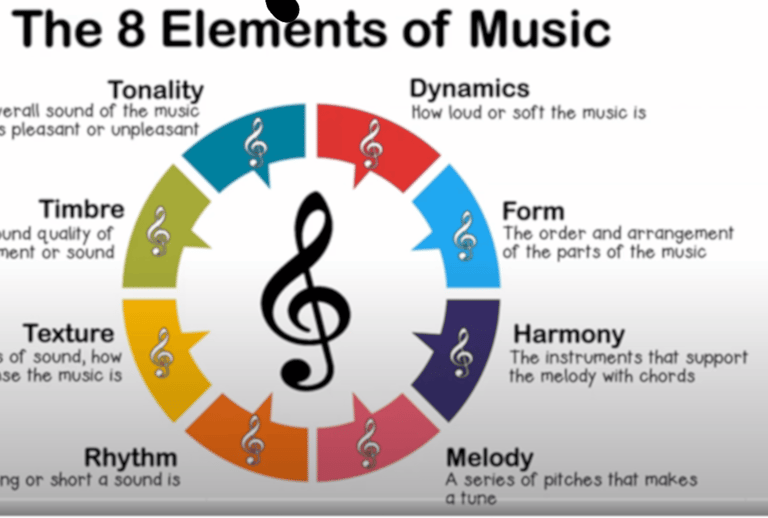
Rhythm: Backbeat Emphasis creates a strong Danceable groove to fundamental Rock
Syncopation: Patterns where Accents fall off of the main Beat with Drum patterns adding interest and drive to Guitar, bass lines, and Vocals
Rhythm Section Layers: Interlocking Patterns that vary in Density and Complexity between Sections
Dynamic Rhythmic Textures: The use of sparser, looser Rhythms for tightly, coordinated, driving Choruses... Bridges or Solos shifts in Meter to heighten Sounds
Curriculum:
The Evolution of Sounds (Week 1)
Phase 1: The Foundations (Early Years – 1955)
"Period Genre Focus Key Listening Elements"
1900 - 1920: proto-Blues...
Incorporated spirituals, work songs, field hollers, shouts, chants, and rhymed simple narrative ballads from the African-American culture that became noticed by early Musicians after the Civil War.
The Proto-Blues "Listening Lab" Elements:
Tracing the transition from a group "shout" to a solo singer responding to their own guitar or banjo line
♪♪♪
The 1920s... Laboratory: Capturing the "Unwritten."
1920 - 1924
In the 20s, the "Base Sounds" of 1880 (Spirituals, Minstrelsy, and Folk) met the Microphone. This changed the Timbre and Dynamics of music forever. How the Elements were Applied in the 20s: The Birth of the "Recorded" Sounds"
Rhythm (The "Hot" Beat): The 20s introduced Syncopation. Bands moved away from the "Oom-pah" military march of the 1880s and toward the "Swing" feel. This is the root of the "Rock" backbeat.
Timbre (The Brass & Banjo): Because recording technology was primitive, instruments had to be loud and "piercing." The Banjo (a 1880s staple) and the Cornet/Trumpet dominated because their "bright" timbre cut through the static.
Texture (Polyphony): Early 20s Jazz and Blues (12 Bar) often featured "Collective Improvisation," where everyone played at once. It was a thick, chaotic texture.
Harmony (The Blue Note): This is where Blues Rock begins. Musicians started "bending" notes (Articulation) to create "Blue Notes"—the flattened 3rd and 7th intervals that don't exist in standard European music.
In the 1920s, the "Art of Listening" underwent a seismic shift, transitioning from an oral tradition to a recorded one. This was the era of "Race Records" and the first commercial capturing of the Delta Blues, and the "Classic Blues" of the vaudeville stage.
Bottleneck/Slide Timbre: Analyzing how early players used metal or glass to mimic the human voice’s ability to slide between pitches (glissando).
Aural Tradition: Understanding music that was never written on a staff, but "etched" into the ear through repetition and variation
Technically, this decade is defined by the Acoustic Recording Process (pre-1925) and the birth of Electrical Recording (post-1925).
In the Acoustic Era (Pre-1925): Musicians played into a large conical horn that physically vibrated a stylus.
Technical Constraint: Bass frequencies were almost impossible to capture, and "loud" instruments like drums would cause the needle to jump.
Listening Lab Focus: We analyze why early 1920s blues sounds are perceived as "thin" and mid-range heavy, and how artists like Blind Lemon Jefferson utilized high-pitched guitar runs to cut through the noise floor.
♪♪♪
1925–1929
The Electrical Revolution: The introduction of the Microphone changed the "Art of Music Sounds" forever.
Technical Shift: The microphone allowed for "Intimate Listening." Singers no longer had to shout to be heard by a horn; they could whisper, groan, and use subtle vocal nuances (the "croon").
Theory III Integration: We study the Harmonic Complexity made audible by microphones—hearing the vibrating wooden body of the guitar and the resonance of the room for the first time.
The Emergence of "The 12-Bar Standard."
While Proto-Blues was fluid and "drifting," the 1920s saw the standardization of the 12-Bar Blues Form.
Structural Analysis: We break down the AAB lyric structure (Statement, Repetition, Resolution) and its corresponding chord progression:
Line 1: I - I - I - I (The Setup)Line
Line 2: IV - IV - I - I (The Tension)Line
Line 3: V - IV - I - I (The Resolution/Turnaround)The Lab Task:
Students listen to Bessie Smith (Classic Blues) vs. Charley Patton (Delta Blues). We analyze how the "Professional" vaudeville sound utilized a piano/horn section for strict timing, while the "Country" sound utilized "irregular measures"—where the singer might add a beat or two to a bar based on emotional whim.
The "Cousin of Nashville" Connection
The 1920s also gave us the Bristol Sessions (1927), often called the "Big Bang of Country Music," occurring just across the mountains from Asheville. Here, we see the crossover: the same 12-bar structures and "Blue Notes" used by bluesmen were being adopted by The Carter Family and Jimmie Rodgers (The Singing Brakeman), who famously integrated "Blue Yodeling."
To truly understand the "Cousin of Nashville" connection, we have to look at how the 1920s functioned as a massive Cultural Blender. In the Asheville and Appalachian region, the "Art of Music Sounds" was being forged by two distinct but overlapping forces: the Delta/Country Blues and the Early Hillbilly/Country sounds.
The DNA Comparison: 1920s Roots Lab
Examples of recordings to see where the branches of the "Classic Rock Tree" first began to tangle.
Track A: Charley Patton – "Pony Blues" (1929)
The Sound: Raw, percussive, and rhythmically erratic Delta Blues.
The Laboratory Analysis: Patton uses the guitar as a drum. He hits the body of the guitar to create a "thump" on the downbeat.
Theory III Listening: Notice the Irregular Meter. Patton doesn't play a perfect $4/4$ time. If he needs an extra beat to finish a vocal thought, he adds it. This is "Human Timing" vs. "Metronomic Timing.
"The Technical Element: Patton’s voice is "gravelly" and distorted naturally—the acoustic precursor to the overdriven vocals of 1960s Rock.
Track B: Jimmie Rodgers – "Blue Yodel No. 1 (T for Texas)" (1927)
The Sound: The "Singing Brakeman" blends Swiss yodeling with African American Blues.
The Laboratory Analysis: Rodgers uses a standard 12-bar blues structure ($I-IV-V$), exactly like Patton, but his guitar playing is "cleaner" and uses alternating bass notes (the "boom-chicka" style).
Theory III Listening: Listen for the "Blue Note" yodel. Rodgers takes a traditional European folk technique (the yodel) and applies it to the "Blue" intervals. This is the exact moment "Country" and "Blues" shook hands.
The "Overlapping DNA" Table
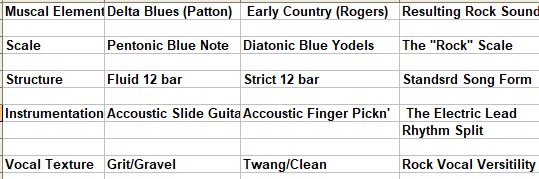
The "1920 to 1930" Evolution Table
Texture: Polyphonic (Chaotic layers)... to Homophonic (Organized blocks/sections).
Timbre: Acoustic Banjo & Cornet... to Electric Guitar & Saxophone.
Articulation: Staccato & "Jumpy"... to Legato & "Smooth" (The "Swing" feel).
Form: 12-Bar Blues / AABA.... to added Solo Sections (The "Star" soloist emerges).
♪♪♪
1930s... The Era of the "Big Band"
In the 1930s, , the music world faced the Great Depression, which forced a "survival of the fittest" evolution in sound... the "Art of Music Sounds" underwent a radical transformation driven by two opposite forces: the massive, choreographed power of The Big Band and the haunted, solo intensity of Delta Blues.
The Era of "Big" Texture and "Electric" Birth. In this decade, the Acoustic-Root Hybrids (Folk, Country, Spiritual) began to fuse with the high-society precision of Jazz.
Texture (Homophony): Unlike the chaotic, "everyone-plays-at-once" texture of the 20s, the 30s introduced Sectional Writing. Trumpets, Trombones, and Saxes played in blocks. This created a massive "Wall of Sound" that prefigures the heavy guitar riffs of rock.
Timbre (The Electric Hum): 1936 is the most important year for your bands. The Electric Guitar (the Gibson ES-150) was introduced. For the first time, the guitar moved from a quiet rhythm instrument to a "Lead" voice that could compete with a 15-piece brass section.
Rhythm (The "Four-on-the-Floor"): Drummers like Gene Krupa began playing a steady, driving $4/4$ pulse on the bass drum. This "driving" rhythm is the exact heartbeat used in Country Rock and Blues Rock decades later.
Dynamics (The Crescendo): With larger bands, musicians could play with extreme volume shifts. This is the birth of the "Power" in Power-Pop and Rock.
1. The Rhythmic Engine: The "Swing Feel."
During this decade, the Institute’s laboratory focuses on the transition from "Stomp" to "Swing" and the first successful attempts to win the battle against volume through Early Amplification.
The most important "Theory III" skill for this decade is distinguishing between a straight beat and a triplet-based swing.
Technical Definition: In the 1930s, the 4/4 time signature evolved. Instead of four even quarter notes (1-2-3-4), musicians began playing with a "long-short" lilt.
The Physics of the Beat: This is technically a twelfth-note feel, where the first note of a pair is twice as long as the second.
The Lab Task: We compare a 1920s "March-style" folk song to a 1930s Benny Goodman or Count Basie track. Students must "feel" the skip in the rhythm—the heartbeat of what would eventually become the Rock 'n' Roll shuffle
2. The Texture Lab: Brass vs. Reeds
The 1930s Big Band era was a masterclass in Tone Color (Timbre).
Brass (Trumpets/Trombones): Sharp, directional, and "bright." We analyze how brass hits were used as "punctuation" in a song.
Reeds (Saxophones/Clarinets): Warm, "woody," and capable of smooth, vocal-like slurs.
The Evolution: We track how the "Screaming Lead Trumpet" of the 30s eventually became the blueprint for the "Screaming Lead Guitar" of the 70s. Both occupy the same frequency range and perform the same "soloist" role.
3. The Birth of the Electric Sound (1931–1939)
This is the "Holy Grail" moment for the Institute. Before 1931, the guitar was a rhythm instrument, buried by the loud brass sections.
The "Frying Pan": In 1931, the Rickenbacker "Frying Pan" (lap steel) introduced the first Electromagnetic Pickup.
The Theory of Transduction: We study how a vibrating string disrupts a magnetic field to create an electrical signal. This changed the "Art of Listening" from hearing moving air to hearing moving electrons.
Charlie Christian: We analyze his 1939 recordings with Benny Goodman. For the first time, a guitar could play single-note lines as loud as a saxophone. The "Lead Guitarist" was born.
4. Delta Blues: The Peak of the Acoustic Soloist
While cities were swinging, the Delta was producing its most sophisticated acoustic sounds.
Robert Johnson (1936-37): We analyze Johnson’s "Cross Road Blues."
Theory III Integration: We look at his Complex Fingerpicking. He plays the bass line, the chords, and the lead melody simultaneously. This "One-Man Band" approach is the DNA for the "Power Trio" format (Cream, Jimi Hendrix Experience) of the 1960s.
Institute Pondering Point: "The Volume War"
The 1930s teach us that technology follows the artist's need. Big Bands got bigger to fill larger dance halls; guitars got electrified to be heard over the Big Bands. The "Sound" of Rock was an inevitable result of musicians wanting to be louder and clearer.
The "1930 to 1940" Evolution Table
Form: Complex arrangements with many "heads"... to repeated Riffs... Simple, catchy loops that stay in the ear.
Timbre: Clean, orchestral brass... to overdriven Sax and Guitar... The first "dirty" sounds.
Melody: "Smooth" and sophisticated... to "Shouting" Melodies. Repetitive and high-energy.
Articulation: Precise and "polite"... to aggressive and Slurred. Bending notes to the extreme.
The "1930 to 1940" Evolution Table
Form: Complex arrangements with many "heads"... to repeated Riffs... Simple, catchy loops that stay in the ear.
Timbre: Clean, orchestral brass... to overdriven Sax and Guitar... The first "dirty" sounds.
Melody: "Smooth" and sophisticated... to "Shouting" Melodies. Repetitive and high-energy.
Articulation: Precise and "polite"... to aggressive and Slurred. Bending notes to the extreme.
♪♪♪
1940s... The Lineage of Loud: A Century of Musical Evolution
In the 1940s, the "laboratory" of music began to boil. The smooth, disciplined "Swing" of the 1930s fractured into two radical directions: the high-speed intellectualism of Be-Bop and the high-energy, dance-driven pulse of Jump Blues.
1. The Jump Blues Explosion: Rock’s Direct Ancestor
As the Big Bands became too expensive to tour during WWII, smaller "combos" took over. They kept the horn section but stripped it down to a few saxophones and a hard-driving rhythm section.
The "Shuffle" and Increased Tempo: Jump Blues (Louis Jordan, Big Joe Turner) took the 1930s swing and sped it up. The "relaxed" lilt became a "driving" force.
The Laboratory Focus: We analyze Volume and Energy. This music was designed for "juke joints"—it was loud, rowdy, and emphasized the "Backbeat" (the snare on 2 and 4), which is the literal heartbeat of every Rock song.
2. The Walking Bass Line: The "Engine" of the 40s
One of the most critical Theory III: Listening skills for this decade is identifying the Walking Bass.
Technical Definition: Instead of just playing on beats 1 and 3, the bassist plays steady quarter notes that "walk" up and down the scale, connecting the chords.
The Impact: This created a sense of forward motion. In the Lab, we trace how this upright bass "walk" eventually transitioned to the electric bass "riff" in the 1950s and 60s
3. Be-Bop: The Intellectual "Sound Laboratory."
While Jump Blues was for the feet, Be-Bop (Charlie Parker, Dizzy Gillespie) was for the head.
Complex Harmony: Be-Bop introduced "extended" chords (9ths, 11ths, 13ths) and rapid-fire key changes.
The "Art of Listening": We train students to hear "dissonance." Be-Bop musicians deliberately played "outside" the key to create tension—a technique later used by psychedelic rock and heavy metal guitarists.
4. The Electric Guitar Transition (The Charlie Christian Legacy)
Charlie Christian didn't just plug in; he changed the language of the instrument.
From Rhythm to Horn-Like Lines: Christian treated the guitar like a saxophone. He played long, fluid, melodic lines that spanned several octaves.
The Laboratory Focus: We listen for Sustain. Because the guitar was amplified, notes could ring out longer than they could on an acoustic. This is the first step toward the "feedback" and "infinite sustain" of 1960s Classic Rock.
5. The "Cousin of Nashville" Moment: Honky Tonk
Parallel to Jump Blues and Be-Bop, the 1940s saw the rise of Honky Tonk in Country music (Hank Williams).
The Intersection: Honky Tonk introduced the "Pedal Steel" and the "Fiddle" as lead instruments, often using the same "swing" feel found in Jump Blues.
Institute Pondering Point: We observe how the "Grit" of Jump Blues and the "Twang" of Honky Tonk were moving closer and closer together, preparing to collide in the early 1950s.
Institute Lab Activity: "The Pulse Test"
We analyze tracks from the 1940s: a Be-Bop, a Jump Blues, and Honky Tonk.
The Task: Students must identify the "Walking Bass" in each and determine which one has the strongest "Backbeat." This identifies the "Rock Potential" of each genre.
♪♪♪
1950s... The Birth of Rock 'n' Roll
In the 50s, is the most critical decade for understanding the birth of the teenager and the dominance of the Electric Guitar. The 40s "Jump Blues" was sped up, the "Country Twang" was added, and the result was Sounds that were loud, rebellious, and physically undeniable.
This decade is defined by simplification. Musicians took the complex harmonies of the 30s and 40s and stripped them down to their rawest, most energetic forms to make them "pop."
Rhythm: (The Heavy Backbeat): This is the "Big Bang." The snare drum moved to a heavy emphasis on beats 2 and 4. This "Backbeat" is the defining characteristic of almost all Rock music that followed.
Timbre: (The Solid Body Guitar): With the invention of the Fender Stratocaster and the Gibson Les Paul, the "Timbre" of music changed from the "hollow" hum of the 30s to a "sharp, solid, and biting" sound.Melody (The Catchy Hook).
Melodies: They became shorter and more repetitive... they were designed for the radio and the "Sing-along."
Harmony: (The 1-4-5 Progression): Most 50s rock returned to a very simple three-chord structure (I - IV - V). This made the music accessible for thousands of young people to start their own bands.
The Roots Connection: The "Rockabilly" Fusion... In the 50s, the Roots Trinity (Folk, Country, Spiritual) fused:
Country: Provided the "twang" and the "slap-back" echo on the guitar (e.g., Scotty Moore).
Spiritual: Provided the vocal "whoops," "shouts," and the high-energy performance style (e.g., Little Richard).
Folk: Provided the simple, storytelling structure of the "Teenage Ballad."
1950-1955... The Dawn of Amplified Sounds
Each ASMI path traces back to its 1950-1955 roots—the moment acoustic traditions met electric voltage. Bands analyze these pivotal shifts, training ears to hear the birth of modern rock DNA.
Guitar Rock: The Electric Transition
The Virtuoso & The Volume (1950–1955) is where the guitar stops being “polite accompaniment” and starts defining the band’s personality.
The Sound: From Polite to Aggressive
Between 1950 and 1955, solid‑body designs like the Gibson Les Paul (introduced 1952) and hot‑rodded hollow‑bodies like the Gretsch 6120 (mid‑1950s) push the guitar toward more sustain, attack, and presence in the mix. Instead of blending into the rhythm section, the guitar cuts through with sharpened treble, punchier mids, and a willingness to flirt with breakup.
Listening Focus: Lead vs. Rhythm (Chug vs. Sting)
The lesson for ASMI ears is to separate two interlocking roles:
Rhythm "Chug" – The steady, percussive drive of boogie and early rock riffs that make bodies move. Chuck Berry’s approach sets the mold: tight, almost drum‑like strumming and double‑stops that define the groove even before the drums fully shift to a rock backbeat.
Lead "Sting" – Short, vocal‑like phrases, bent notes, and bright tone that leap above the band. This is the seed of the “guitar hero”: the instrument speaks like a solo singer, with phrases you can hum as easily as the vocal line.
Students are trained to map when the guitar is functioning as engine (chug) versus narrator (sting), sometimes within the same bar.
Basket of Sounds: Tools of the New Hero
The period’s sound‑palette becomes part of the ear‑training:
Gibson Les Paul – Solid mahogany body with maple top and new bridges (wraparound, then Tune‑o‑matic) yields singing sustain and thicker tone, ideal for held notes and early “heroic” lines.
Gretsch 6120 hollow‑body – Introduced mid‑’50s with Chet Atkins’s endorsement, quickly embraced by rockabilly and early rock players like Eddie Cochran and Duane Eddy for its bright, twangy attack and visual flair.
Whammy/Vibrato Systems – Early Bigsby units and other vibrato bridges allow pitch swoops and shimmers, planting the idea that the guitar can literally bend the emotional fabric of the song.
In ASMI terms, bands learn that this is the moment tone + technique = identity: how you hit the string, how long it rings, and how you shape its pitch all start to matter as much as the chord progression itself.
The 8 Elements: The Guitar Rock Evolution (1950–1955)
1. Timbre (The Birth of the "Electric" Voice)
The Shift: From "Natural Wood" to "Electrified Tube Distortion."
1950–1955 Evolution: Before 1950, guitarists tried to sound "clean." By 1952, artists like Ike Turner and Pat Hare were cranking small amplifiers until the vacuum tubes "broke up." This created the overdriven timbre that defines Guitar Rock. The invention of the Fender Stratocaster (1954) added a "bright" and "quacky" tonal option that changed the genre's DNA.
2. Dynamics (The High-Volume Ceiling)
The Shift: From "Balanced" to "Dominant."
1950–1955 Evolution: With the solid-body guitar (Fender Broadcaster/Telecaster and Gibson Les Paul), feedback was finally controlled. This allowed guitarists to play at Stage Volumes that could compete with a full horn section or a loud drummer. The guitar became the loudest thing in the room.
3. Rhythm (The "Straightened" 8th Note)
The Shift: From the "Swing/Shuffle" to the "Straight 8."
1950–1955 Evolution: Led by Chuck Berry and Bo Diddley, the rhythm moved away from the "swinging" feel of jazz. Berry introduced the repetitive, rhythmic "chugging" on the lower strings. Bo Diddley introduced the "Bo Diddley Beat" (a syncopated 3-2 Clave), making the guitar a purely percussive force.
4. Form (The Riff as the Foundation)
The Shift: From "Chords" to "The Riff."
1950–1955 Evolution: Songs began to be built around a signature guitar "hook" rather than just a vocal melody. Link Wray and Chuck Berry started using repetitive melodic-rhythmic patterns (Riffs) to anchor the entire Form of the song.
5. Articulation (The "Bent" Note and the "Slide")
The Shift: From "Precise" to "Expressive Slurs."
1950–1955 Evolution: Guitarists began to mimic the human voice. The String Bend and the Vibrato became standard. By 1955, Chuck Berry’s "double-stops" (playing two notes and bending one) became the universal language of Guitar Rock Articulation.
6. Texture (The Power Duo: Guitar and Drums)
The Shift: From "Orchestral Layers" to "The Power Trio/Quartet."
1950–1955 Evolution: The piano and horns began to disappear or move to the background. The Texture became "Guitar-Heavy." The interaction between the distorted guitar and the heavy snare drum created a "thin but aggressive" texture that was radically different from the "thick" Big Band sound.
7. Pitch (The Higher Register)
The Shift: From "Rhythm Chords" to "High-Register Leads."
1950–1955 Evolution: As the guitar became the lead voice, guitarists moved up the neck. Soloing in the higher octaves allowed the guitar to cut through the frequencies of the bass and drums.
8. Harmony (The "Power" Chord Precursor)
The Shift: From "Jazz Chords" to "Simplified Triads."
1950–1955 Evolution: To keep the sound from becoming "muddy" under distortion, guitarists stripped away the complex 7ths and 9ths of Jazz. They focused on Root and Fifth intervals—the precursor to the Power Chord.
Guitar Rock Evolution Summary: 1950 vs. 1955
Timbre: Clean, Archtop "Thud."... to a Bright, Solid-Body "Twang" & Distortion.
Rhythm: Jazz-influenced Shuffle... to a Driving, Straight-8th "Chug."
Articulation: Staccato picking... to Bends, Slides, and Double-Stops.
Texture: Subordinate to Horns/Piano... to the Lead "Wall of Sound."
Key Artists: The years 1950–1955 represent the most volatile shift in guitar history. This was the moment the guitar transitioned from a "rhythm box" hidden in the back of the band to a "lead weapon" at the front.
In your ASMI framework, these artists utilized the newly invented Solid-Body Guitar and Vacuum Tube Amplifiers to rewrite the 8 Elements of Music.
🎸 The Guitar Rock Architects (1950–1955)
1. Chuck Berry (The "Blueprint" Architect)
The "Why": He codified the "Double-Stop" intro and the rhythmic "Chug."
Evolution of the Sound: Berry took the piano boogie-woogie of the 40s and translated it to the guitar. He shifted the Articulation by playing two strings at once (Double-Stops) and bending them, creating a "clanging" sound that defined the Rock lead.
ASMI Element: Rhythm & Form. He established the "Verse-Chorus-Solo" structure that 99% of guitar rock still follows.
2. Bo Diddley (The "Percussive" Architect)
The "Why": He proved the guitar could be a drum.
Evolution of the Sound: He introduced the "Bo Diddley Beat" (a 3-2 Clave). Instead of playing standard chords, he used the guitar as a rhythmic machine.
ASMI Element: Timbre & Rhythm. He used heavy "Tremolo" effects and a raw, distorted Timbre that anticipated Punk and Funk Rock.
3. Ike Turner "Kings of Rhythm" (The "Distortion" Pioneer)
The "Why": Recorded what is often called the first rock song, "Rocket 88" (1951).
Evolution of the Sound: Legend says the guitarist (Willie Kizart) had a broken speaker stuffed with newspaper. This accidental Timbre of "fuzz" or "distortion" changed everything. It proved that a "broken" or "ugly" sound was actually more exciting than a clean one.
Note: · The distorted "fuzz" guitar accidental... song covered by Wynonnie Harris (1950), Jackie Brenston and his Delta Cats (19510, Bill Haley and the Saddlemen (1951), and James Brown (1951).
ASMI Element: Timbre. The birth of the "Overdriven" guitar tone.
4. Pat Hare (The "Heavy" Architect)
The "Why": The missing link between Blues and Heavy Meta
Evolution of the Sound: Working with Bobby Bland and Muddy Waters between 1952–1954, Hare used a level of Power Chord distortion and aggressive Dynamics that was decades ahead of its time.
ASMI Element: Texture. He created a "thick" sonic wall that made the guitar sound massive.
5. Carl Perkins (The "Technical" Architect)
The "Why": The king of the 1954 Sun Records "Rockabilly" sound.
Evolution of the Sound: He blended the Articulation of Country picking with the Melody of the Blues. His use of "Slapback Echo" (a single fast delay repeat) created a shimmering, high-energy Texture.
ASMI Element: Articulation & Texture. The "Twang" that influenced The Beatles and every "Guitar Hero" since.
6. Link Wray (The "Power Chord" Architect)
The "Why": Though his biggest hit "Rumble" was later ('58), his experiments began in the early 50s.
Evolution of the Sound: He began punching holes in his amplifier speakers to get more grit. He focused on the "Root and Fifth" intervals.
ASMI Element: Harmony. He stripped away complex jazz chords to create the "Power Chord," the fundamental building block of Guitar Rock.
7, Goree Carter (The "Proto-Rock" Architect)
The "Why": His 1949/50 track "Rock Awhile" is often cited as the first true "Rock" guitar performance.
Evolution of the Sound: He used an overdriven Timbre that sounded remarkably like Chuck Berry, but several years earlier.
ASMI Element: Timbre & Articulation. He moved away from the "clean" jazz lines of the 40s and introduced the "slurred" blues-rock attack. He proved that a loud, stinging guitar could lead an entire jump-blues band
ASMI Element: Timbre & Articulation. He moved away from the "clean" jazz lines of the 40s and introduced the "slurred" blues-rock attack. He proved that a loud, stinging guitar could lead an entire jump-blues band.
8. Les Paul (The "Technological" Architect)
The "Why": He invented the tools that made the genre possible (The Solid-Body Guitar and Multitracking).
Evolution of the Sound: By creating the Gibson Les Paul (1952), he allowed for Sustain and Dynamics that hollow-body guitars couldn't handle due to feedback.
ASMI Element: Texture & Timbre. His 1951–1953 hits (like "How High the Moon") featured "Sound-on-Sound" layering. He taught the world that the guitar could be an entire "orchestra" of sound, not just a single voice.
Danny Cedrone (The "Big Bang" Architect)
The "Why": His solo on Bill Haley’s "Rock Around the Clock" (1954) is the most influential 20 seconds in guitar history.
Evolution of the Sound: Cedrone was a jazz-trained player, but for this session, he played a blistering, high-speed solo that combined chromatic jazz runs with western swing and raw blues power.
ASMI Element: Articulation & Rhythm. The solo was so "perfect" and high-energy that it set the standard for what a "Rock Solo" had to be: fast, melodic, and rhythmically driving
♪♪♪
Blues Rock: The Urban Electric Pulse
The Sound: Delta moans migrate to Chicago, plugged into amps.
Listening Focus: Overdrive—tube amps pushed to breakup.
Key Analysis: "Shuffle" swing flattens toward straight-8 rock drive.
Key Influential Artists: The "Big Four" Influencers
1. Muddy Waters (The "Voltage" Architect)
The Sound: Electric Chicago Blues.
The "Why" for Blues Rock: Muddy took the acoustic slide guitar of the Delta and plugged it into a vacuum tube amplifier.
Element Shift (Timbre): He introduced Sustained Overdrive. Before Muddy, a guitar note died quickly. By 1950, Muddy was using volume to make notes "cry" and "sustain," which is the foundational sound of every rock guitar solo.
ASMI Lesson: He proved that "loud" could be "emotional."
2. Howlin’ Wolf (The "Grit" Architect)
The Sound: Heavy, Primal Blues.
The "Why" for Blues Rock: Wolf brought a terrifying Dynamics to the music. His voice was naturally distorted, and his band (featuring guitarist Hubert Sumlin) played with a "heavy" rhythmic thud.
Element Shift (Texture): He moved away from the polite "swing" of the 40s toward a dark, aggressive Texture. When you hear Cream or Led Zeppelin, you are hearing the ghost of Howlin' Wolf's 1951-1954 recordings.
ASMI Lesson: He introduced the "Riff"—a repetitive, heavy guitar line that anchors the song.
3. Elmore James (The "Slide" Architect)
The Sound: The "Sky is Crying" Electric Slide.
The "Why" for Blues Rock: In 1951, he recorded "Dust My Broom." That opening slide guitar riff is arguably the most famous riff in the history of the genre.
Element Shift (Articulation): He played with extreme Articulation—fast, aggressive, and high-pitched slide movements. He influenced everyone from Jeremy Spencer (Fleetwood Mac) to Duane Allman.
ASMI Lesson: He showed that the guitar could replace the human voice as the primary "screamer" in the band.
4. Little Walter (The "Amplified" Architect)
The Sound: The "Saxophone" Harmonica.
The "Why" for Blues Rock: While he played harmonica, his influence on Blues Rock was technical. In 1952, he was the first to cup a small microphone in his hands and plug it directly into a guitar amp.
Element Shift (Timbre): He turned a "folk" instrument into a "rock" instrument by saturating the sound with distortion. This "fat" tone is what guitarists later tried to mimic with their pedals.
ASMI Lesson: Distortion is a tool, not a mistake
♪♪♪
Jazz Rock: The Virtuoso Swing
The Sound: Big band swing condenses into jump blues combos.
Listening Focus: Horns as riff machines—sax "honking" proto-leads. Syncopation: The unexpected accents and "shouts" of the horn sections and piano triplets.
Key Analysis: Saxophone owns the shout role guitar later claims; jazz precision meets pop energy.
Essential Archetype: Louis Jordan & His Tympany Five—surgical rhythm locking jump swing... "Choo Choo Ch'Boogie" (1946, '50s echoes) or "Five Guys Named Moe" (1952 sessions): Honking sax riffs and jump precision.
Key Influential Artists: The "Pre-Fusion" Architects... the "Mechanical Foundation"
1. Louis Jordan (The "Rhythmic" Bridge)
The Sound: Jump Blues (The transition from Big Band to Small Combo).
The "Why" for Jazz Rock: Jordan took the sophisticated horn arrangements of Jazz and simplified the Rhythm into a hard, driving shuffle.
Element Shift (Rhythm): He proved that Jazz musicians could play a Backbeat. Without the "Jump" rhythm, there is no Rock; without the Horns, there is no Jazz Rock.
ASMI Lesson: He taught horn players how to be "Funky" before Funk existed.
2. Bill Doggett (The "Groove" Architect)
The Sound: R&B Organ/Guitar instrumentals.
The "Why" for Jazz Rock: Doggett (a former jazz pianist) moved to the Hammond organ and focused on "The Groove."
Element Shift (Texture): He popularized the Organ Trio sound (Organ, Guitar, Drums) which became a staple texture of Jazz Rock. His 1951–1955 recordings showed that you could have a Jazz-influenced instrumental hit that people could actually dance to.
ASMI Lesson: The "B3 Organ" is the glue between Jazz harmony and Rock grit.
3. Les Paul (The "Technical" Architect)
The Sound: High-Tech Pop/Jazz Guitar.
The "Why" for Jazz Rock: While he was a Jazz player at heart, Les Paul invented the tools of Rock.
Element Shift (Timbre & Texture): Between 1950 and 1954, he pioneered Multitrack Recording and Overdubbing. He showed that a guitar could be layered into a "Wall of Sound."
ASMI Lesson: Jazz Rock is a "Studio Genre." Les Paul gave us the ability to layer complex harmonies that couldn't be played by one person.
4. Miles Davis (The "Attitude" Architect)
The Sound: Cool Jazz / Hard Bop (Birth of the Cool era).
The "Why" for Jazz Rock: Although he wouldn't "go electric" until 1968, in the early 50s, Miles was already stripping away the "clutter" of Bebop.
Element Shift (Form & Dynamics): He moved toward Modal Jazz, focusing on single scales rather than fast-changing chords. This "Open Space" is what later allowed Rock guitarists to jam over Jazz foundations.
ASMI Lesson: Complexity doesn't mean "busy." Sometimes one note (Pitch) held over a steady beat (Rhythm) is more "Jazz" than a thousand notes.
♪♪♪
The Folk Hybrid (The "Story & Texture" Track)
In the years between 1950 and 1955, the "Folk Hybrid" category underwent a massive transformation. This was the era where "mountain music," "church music," and "honky-tonk" stopped being isolated regional sounds and began to merge into a professional, national language that would eventually birth Folk Rock and Americana.race.
"Folk Hybrid"... “Narrative‑Acoustic”
Country: From Hillbilly to “Hillbilly Shakespeare”
Early ’50s country is still branded “hillbilly,” but Hank Williams is already fusing honky‑tonk groove with confessional poetry.
By 1950–1952, songs like “Cold, Cold Heart” and “I’m So Lonesome I Could Cry” show country lyrics becoming more introspective and literary, earning him the “Hillbilly Shakespeare” tag.
Sonically, it’s fiddle, steel, and a simple acoustic strum, but the emotional and narrative weight is much heavier than ’40s barn‑dance fare.
Spiritual/Gospel: Church Feel Inside Country
Hank and his peers grow up on hymnody; “I Saw the Light” (recorded 1948 but circulating heavily through the early ’50s) is a template for hillbilly gospel inside country shows.
By the early ’50s, radio shows and Opry sets routinely mix “heartbreak” songs with explicitly spiritual numbers, normalizing the blend of barroom and church in one repertoire.
Thematically, you get sin, redemption, and judgment in the same voice that sings about cheating and drinking—spiritual content embedded in the same acoustic guitar frame.
Folk: Underground but Present
Commercial “folk revival” doesn’t hit the charts until the later ’50s, but the groundwork is being laid in coffeehouses, hootenannies, and left‑leaning circles with artists like Pete Seeger and others carrying topical ballads and traditional songs.
In the early ’50s, acoustic‑guitar‑backed folk is heard in small urban rooms, college campuses, and informal sing‑alongs; it’s not yet teen pop, but it’s building a performance and listening culture around story‑heavy, unadorned songs.
This scene keeps the “plain voice + guitar” aesthetic alive, ready to merge with country and gospel sensibilities when folk‑pop finally blooms at the end of the decade.
How They Converge (1950–1955)
Country supplies the high‑lonesome voice and narrative craft, gospel supplies the communal spiritual charge, and folk supplies the plainspoken, guitar‑and‑voice delivery.
Studio technology—primitive mics, room echo, early slap‑back—starts to give these simple setups a ghostly aura, turning small narratives into something that feels mythic and spacious.
By 1955, the ingredients: “Narrative‑Acoustic Hybrid”: a single steel‑string guitar, a sincere voice, and lyrics that move easily between heartbreak, social commentary, and spiritual longing. Hank becomes the archetype—country, gospel, and folk sensibility in one person, one sound.
Key Architects of the Folk/Country/Spiritual Hybrid (1950-1955)
These are the foundational figures blending hillbilly country’s high-lonesome twang, gospel’s call-response and redemption themes, and folk’s narrative simplicity into the acoustic blueprint for ASMI Path 4. Hank Williams towers over all, but contemporaries provide the ecosystem.
Hank Williams (The Central Figure)
Role: “Hillbilly Shakespeare”—poetic country lyrics infused with gospel spirituality and folk confessionals.
Key Tracks: "I Saw the Light" (1948/1950s staple), "The Old Country Church" (1952), "Beyond the Sunset" (1950).
The Louvin Brothers (Charlie & Ira)
Role: Close-harmony gospel-country duets with spiritual fire and Appalachian folk roots.
Key Tracks: "Satan Is Real" (1951 sessions), "The Christian Life" (early '50s).
Carter Family (A.P., Maybelle, Sara; Legacy Continues)
Role: Folk-country progenitors; sacred songs like "Will the Circle Be Unbroken?" recirculate in '50s Opry/hillbilly sets.
Key Tracks: "No Depression in Heaven" (1930s roots, '50s covers).
Statesmen Quartet
Role: Pioneering white gospel quartet; boogie-gospel energy influences hillbilly shows (Elvis precursor).
Key Tracks: "Peace in the Valley" (1950s recordings).
Blackwood Brothers Quartet
Role: Hot gospel quartet style with boogie elements; hybrid harmony bridging church and country stages.
Key Tracks: Early boogie-gospel singles (1949-1955).
Lefty Frizzell
Role: Honky-tonk storyteller with gospel-tinged ballads; vocal style echoes Hank's lonesome cry.
Key Tracks: "I Love You a Thousand Ways" (1950).
Kitty Wells
Role: Female pioneer blending country narrative with spiritual undertones ("Queen of Country").
Key Tracks: Early gospel-country singles (1952+).
Era Context: This window sees hillbilly radio/Opry mixing gospel sets with country heartbreak, prepping rockabilly fusion. No pure "folk revival" stars yet (that's late '50s), but the acoustic-guitar + sincere-voice template solidifies via these architects.
ASMI Lesson Summary: 1950-1955 Folk Hybrid
Core Takeaway: This era forges the Narrative-Acoustic template—country's high-lonesome twang, gospel's spiritual call-response, and folk's plainspoken stories unified under one steel-string guitar and sincere voice. It's intimate music that feels vast, prepping rock's emotional backbone.
What Bands Learn to Hear
Vocal Sincerity: Lyrics of sin, redemption, isolation delivered raw—no effects, just breath and intent (Hank Williams archetype).
Acoustic Pulse: Steel-string "heartbeat" strums framing narrative space; room echo/slap-back as natural "production."
Hybrid Convergence: Country heartbreak + gospel uplift + folk confessionals in one setlist (Opry radio norm).
Note: Ray Perkins (1932–1969) was a solid local/regional player in the early '50s Louisiana swamp pop and hillbilly scene, but he doesn't rank as a core "architect" of the national Folk/Country/Spiritual hybrid like Hank Williams or the Louvins.
Profile:
Background: Lafayette High School talent contest winner (early 1950s); smooth tenor with The Blue Notes or similar local R&B/hillbilly groups. Swamp pop pioneer blending Cajun country, R&B, and teen romance—think piano-driven uptempo with New Orleans flavor.
1950-1955 Role: Active in Louisiana club circuit (e.g., Hideaway Club), performing jived-up hillbilly standards. Recorded sporadically, but no major national hits or Opry exposure during this window.
Key Tracks (if any from era): Sparse discography; later known for medleys like "Look for the Silver Lining" (public domain standards). More remembered as a regional draw than a hybrid innovator.
Why Not a Top Architect?
The 1950-1955 "Folk Hybrid" builds on Grand Ole Opry/national radio stars (Hank, Louvins) and gospel quartets who shaped the acoustic-narrative template that rockabilly absorbs. Perkins is more "swamp pop precursor" (local R&B-country fusion), emerging post-1955 alongside Carl Perkins (no relation).
Great for showing how hybrid sounds bubbled up locally before Elvis/Sun Records nationalized them.
Verdict for ASMI: Reference as honorable mention for "hillbilly evolution in the South," but prioritize Hank & Co. for playlist primacy.
♪♪♪
Pre Progressive/Alternative: The "Weird" Pioneers
In the 1950–1955 window, Progressive Rock didn't exist as a genre, but its "operating system" was being coded.
The 8 Elements were being stretched by classical composers, jazz experimenters, and tech-obsessed inventors who were bored with the standard 4/4 pop song.
The 8 Elements: The Prog Evolution (1950–1955)
1. Rhythm (The Break from the Square)The Shift:
Moving from "The March" to "The Math."1950-55 Evolution: While the rest of the world was falling in love with the "Backbeat," proto-prog artists like Moondog were using Odd Meters ($5/4, 7/8$). They proved that a groove didn't have to be divisible by two. This is the "Math Rock" DNA.
2. Form (The Death of the 3-Minute Song)The Shift:
From "Verse-Chorus" to "The Suite."1950-55 Evolution: Influenced by Classical Symphonies, artists began creating Through-Composed pieces. They stopped repeating choruses and started telling linear stories with distinct "Movements." This laid the groundwork for the 20-minute epics of Yes and Genesis.
2. Melody (The Chromatic Expansion)The Shift:
From "Pentatonic Blues" to "Complex Intervals."1950-55 Evolution: Drawing from Modern Classical (Stravinsky/Bartók), melodies became more angular and less predictable. The use of "Dissonance" as a tool began to leak into popular consciousness, leading to the "dark" melodic lines later used by King Crimson.
4. Harmony (The Vertical Build)The Shift:
From "3-Chords" to "Extended Clusters."1950-55 Evolution: Jazz-influenced composers started using Suspended chords and 9th/11th/13th intervals. This created a sense of "tension" and "suspense" that is the hallmark of Space Rock and Symphonic Prog.
5. Timbre (The Laboratory Sound)The Shift:
From "Natural" to "Synthetic."1950-55 Evolution: This is the era of the early Electronic Oscillator. Stockhausen and Raymond Scott were creating sounds that didn't come from a string or a reed. This is the birth of the Synthesizer Timbre used by Pink Floyd and Krautrock.
6. Texture (The Multi-Layered Wall)The Shift:
From "Band in a Room" to "Sonic Architecture."1950-55 Evolution: Les Paul’s invention of Multitracking allowed a single musician to become a "Symphony." He could layer 8 guitars on top of each other, creating a dense, unnatural Texture that defined Prog-Metal and Post-Rock.
7. Dynamics (The Extreme Contrast)The Shift:
From "Steady Volume" to "The Whisper and the Scream."1950-55 Evolution: Borrowing from Classical High-Fidelity, recordings began to use the full spectrum of volume. Pieces would start with a single, quiet note and build to a terrifying orchestral climax. This "Dynamic Range" is the heart of Tool and Sigur Rós.
8. Articulation (The Surgical Strike)The Shift:
From "Feeling" to "Precision."1950-55 Evolution: The Raymond Scott influence. Music became "Mechanical." Every note had to be perfectly placed and staccato. This obsession with Technical Articulation is what eventually became Dream Theater and Prog-Metal.
The "Pre-Prog & Alt" Architects (1950–1955)
1. Les Paul (The "Alternative" Inventor)
The Sound: Multi-layered, high-speed guitar experiments.
The "Why": Les Paul was the first "Alternative" artist because he used technology to create sounds that were physically impossible to play live.
Element Shift (Texture & Timbre): Using Sound-on-Sound recording and Tape Delay, he created the first "dense" musical textures. Every Prog-Rock band that uses layers of guitars or every Alt-Rock band that uses delay pedals (like The Edge or Radiohead) is using Les Paul’s 1951 blueprint.
ASMI Lesson: Technology is an instrument. If the sound doesn't exist in nature, create it.
2. Moondog (The "Progressive" Outsider)
The Sound: Street-level "Classical" with odd time signatures.
The "Why": Known as "The Viking of 6th Avenue," Moondog was a blind composer who lived on the streets of NYC. In the early 50s, he was recording music in odd time signatures ($5/4$, $7/8$) long before Dave Brubeck or Pink Floyd.
Element Shift (Rhythm & Form): He broke the "standard" 4/4 backbeat. He proved that "Pop" or "Folk" instruments could play mathematical, complex rhythms.
ASMI Lesson: The "Beat" doesn't have to be a square; it can be a polygon.
3. The Raymond Scott Quintette (The "Cartoon" Complexity)
The Sound: Highly technical, "Mechanical" Jazz.
The "Why": While his music was famously used in Looney Tunes, in the early 50s, Scott was pioneering electronic music and "automated" composing.
Element Shift (Form & Articulation): His music was incredibly fast and required surgical precision. This "mechanical" Articulation is the direct ancestor of Math Rock and Prog-Metal.
ASMI Lesson: Music can be "Whimsical" and "Difficult" at the same time.
4. Karlheinz Stockhausen (The "Electronic" Seed)
The Sound: Early Musique Concrète / Electronic Sine Waves.
The "Why": In 1953, he began working in the Studio for Electronic Music in Cologne. He was the first to treat Pure Sound as a composition tool.
Element Shift (Timbre): He moved away from instruments entirely, using oscillators and tape loops. Without Stockhausen, there is no Pink Floyd Dark Side of the Moon or Radiohead Kid A.
ASMI Lesson: Timbre is more than just "Tone"—it is the manipulation of the air itself.
♪♪♪
6. Funk Rock: The "Proto-Groove"
The Sound: Backbeat claims supremacy.
Listening Focus: Snare crack on 2-and-4. The "One": The heavy, undeniable emphasis on the first beat of every measure (the downbeat).
Key Analysis: Cymbal wash shifts to rimshot punch; triplets roll over heavy kick.
Essential Archetype: Big Joe Turner’s "Shake, Rattle and Roll" or Fats Domino—piano bounce meets rock foot.
1955-1960... From Shout to Scream
The "shouting" of early '50s evolves into defined style—structural sophistication for ASMI ears. Bands analyze how noise becomes architecture, volume births heroes.
1. Guitar Rock: The Virtuoso & The Volume
The Sound: "Guitar Hero" emerges; polite tone turns aggressive.
Listening Focus: Lead/rhythm split—"Chugging" (Chuck Berry) vs. "Stinging" lead (Buddy Holly).
Basket of Sounds: Gibson Les Paul, Gretsch 6120; whammy bar pitch dives.
Essential Archetype: Chuck Berry – "Johnny B. Goode" (1958): Double-stop DNA of rock leads.
2. Blues Rock: The "Chicago" Overdrive
The Sound: Tube saturation as deliberate art.
Listening Focus: Sustain—notes linger longer than '50s twang.
Basket of Sounds: Fender Tweed amps at $10 limit; speaker growl.
Essential Archetype: Link Wray – "Rumble" (1958): Power-chord distortion evokes menace.
3. Jazz Rock: The Big Band "Bop"
The Sound: Jazz horns + heavy rock backbeat.
Listening Focus: Horizontal dynamics—piano/horns dance around vocal.
Basket of Sounds: Upright bass slap technique.
Essential Archetype: Little Richard – "Lucille" (1957): Piano eighth-note pound repurposes jazz chaos.
4. Narrative-Acoustic Hybrid: The "Folk-Pop" Bloom
The Sound: Acoustic beds teen tales.
Listening Focus: Blend—guitar/vocal breathe as one.
Basket of Sounds: Martin D-28; U47 mics catch every nuance.
Essential Archetype: The Everly Brothers – "All I Have to Do Is Dream" (1958): Close-harmony country-to-Beatles bridge.
5. Progressive/Alternative: The Studio Auteurs
The Sound: "Perfect" unnatural pop via studio magic.
Listening Focus: Spatial field—echo, reverb, panning.
Basket of Sounds: Echo chambers; celeste/harpsichord snuck in.
Essential Archetype: Buddy Holly – "Everyday" (1957): Knee-slap percussion + celeste as alt innovation.
6. Funk Rock: The "Syncopated" Snare
The Sound: New Orleans grease over straight thump.
Listening Focus: Pocket—drummer lags for swagger.
Basket of Sounds: High-tuned snare crack.
Essential Archetype: Fats Domino – "The Fat Man" (1949/1950s staple): Piano-drum roll from swing to groove.
The "1950 to 1960s" Evolution Table
Texture: Thin (Guitar, Bass, Drums, Piano... 4-piece band)... to Dense (Multi-layered guitars/keys)).
Timbre: Clean: "Twang" or "Slap-back" Echo".. to Fuzz" Distortion, Feedback, and Reverb.
Articulation: Rhythmic Percussive and "Staccato.".. to "Legato" & Sustained (Sitar-like)... "vocal" solos.
Form: The 2-minute "Radio Singles"... to the 4-7 minute "Epic" Sounds begins to emerge.
Dynamics: Generally static (Constant Loud).... to Wide Range (Whisper to the Scream).
Phase 2: The Rock Revolution (1955 – 1969)
Focus: How technology and social change electrified the sound.
The "Listening" Methodology: Music Theory III "Listening"
Level 1: Structural Listening (Identifying the "Skeleton")
Where are the transitions? Is there a bridge or a re-intro?
Level 2: Harmonic Dictation (Identifying the "Muscle")
Is that a bV II chord or a IV chord? Is the bass playing the root or an inversion?
Level 3: Narrative Listening (Identifying the "Soul")
How does the theory (e.g., a sudden key change) support the emotional story of the lyrics
1955 - 1963 The Crossover
The Institute’s laboratory examines the literal "chemical reaction" that occurred when independent regional sounds—specifically the Country "Twang" of the South and the R&B "Drive" of the urban centers—collided on the national airwaves. This period is less about the invention of new notes and more about the re-packaging of energy.
1. The "Twang" vs. The "Drive"
To understand this era, students must use their Theory III: Listening skills to separate the two primary ingredients of the early Rock 'n' Roll "Sound."
The Country "Twang": Derived from the "Cousin of Nashville" lineage. We listen for the major-key brightness, the "slapback" echo on vocals (Sun Records style), and the "tic-tac" bass (doubling the bass line on a muted guitar).
The R&B "Drive": Derived from the Jump Blues of the 1940s. We analyze the heavy backbeat (snare on 2 and 4) and the aggressive "shouting" vocal style that pushed the limits of early microphones.
2. Lab: The Rise of the "Cover" and "Crossover" Track
We analyze the 1950s industry practice of "covering" songs to move them from the R&B charts to the Pop charts.
The Case Study: We listen to Big Mama Thornton’s original "Hound Dog" (1952) and compare it to Elvis Presley’s version (1956).
Listening Lab Focus: We identify what was "lost" and "gained." Thornton’s version is a mid-tempo, gritty blues; Elvis’s version is a high-speed, "straight-eighth" rock anthem. This shows how a Crossover Track often simplified the rhythm to increase the "danceability" for a mass audience.
3. Lab: Chuck Berry’s Guitar Patterns vs. Traditional Blues
If the 1940s was about the walking bass, the 1950s was about the Guitar Riff.
The Traditional Blues Shuffle: We listen to a 1930s Delta shuffle where the rhythm is "swung" (triplet-based).
The Berry Shift: We analyze Chuck Berry’s "Johnny B. Goode." Students observe how he took the Boogie-Woogie piano left-hand pattern and moved it to the low strings of the electric guitar, playing it with a straight-eighth feel.
The "Double Stop": We study Berry’s signature move—playing two notes at once (usually on the top strings) to create a "horn-like" blast. This is the moment the guitar officially replaced the saxophone as the "voice" of the band.
4. The "In-Between" Years: 1959–1963
Before the British Invasion, Rock 'n' Roll underwent a "polishing" phase.
The Wall of Sound: We analyze Phil Spector’s production. This is an early Theory III lesson in "Mono-layering"—doubling and tripling instruments (three pianos, five guitars) to create a massive, orchestral sound on a single radio speaker.
The Surf Sound: Tracing the evolution of "clean" electric guitar through Dick Dale and The Beach Boys, focusing on "tremolo" and "spring reverb" as new sonic colors.
Institute Pondering Point: The "Hybrid" Identity
This era proves that Rock 'n' Roll was not a single genre, but a Radio Phenomenon. It was the first time in history that a teenager in Asheville could hear the same sound as a teenager in Detroit. The "Crossover" wasn't just musical; it was the beginning of a unified youth culture.
1964–1969: The British Invasion to Woodstock
At the Institute, we analyze this period through the lens of "The Cultural Return": how British kids took American R&B, Blues, and Rockabilly (which had become "sanitized" or forgotten in the US by the early '60s), electrified it, and sold it back to America with a new, sophisticated edge.
1. The Musical Shift: From "The Single" to "The Sound"
Before 1964, the US charts were dominated by solo pop singers and novelty acts. The British Invasion shifted the focus to the self-contained band—groups that wrote their own material, played their own instruments, and created a cohesive sonic identity.
Harmonic Innovation: Moving beyond the standard I-IV-V blues progression. We analyze how The Beatles used "Picardy Thirds" and modal shifts borrowed from English Folk and Classical music.
The "Dirty" Tone: The Kinks and The Who introduced deliberate distortion (Dave Davies famously sliced his amp speaker with a razor for "You Really Got Me"). This is the birth of the Hard Rock "Laboratory.
The Riff as Foundation: Instead of just strumming chords, bands like The Rolling Stones and The Animals built songs around repetitive, melodic guitar "hooks" (riffs), a direct evolution from Delta Blues.
In this "Evolution Lab," we witness the fastest rate of change in musical history. In just five years, the music moved from the basement clubs of Hamburg to the sophisticated, multi-track experiments of Abbey Road, and finally to the massive, mud-soaked stages of Woodstock.
1. 1964–1965: The Beat Era
Focus: Energy, Synchronicity, and the "Mop-Top" Pop Sound. During these two years, the British Invasion bands (The Beatles, The Hollies, The Searchers) focused on refining the "Combo" sound.
The Vocal "Blend": We analyze the move from a single lead singer to three-part vocal harmonies. We study the influence of the Everly Brothers and Motown on British vocal arrangements.
The "Jangle": Technical analysis of the Rickenbacker 12-string guitar. Students listen for the "chime" and "shimmer" (high-frequency resonance) that defined the mid-60s pop sound.
Theory III Tip: Identify the V-IV-I cadence and the "Major II" chord (e.g., a D Major chord in the key of C), which gave British pop its distinct, bright lift.
2. 1966–1967: The Experimental Turn
Focus: The Studio as an Instrument. This is where Music Theory III truly takes center stage. The laboratory moves away from what a band can play live to what can be created through technology.
The Sitar and Indian Ragas: We study "Within You Without You" and "Fancy." We analyze the Drone (static harmony) and the use of the Mixolydian mode, breaking away from Western blues-based structures.
Tape Manipulation: We analyze ADT (Artificial Double Tracking) and "backwards" tracks. Students learn to hear the "attack" and "decay" of a note in reverse—a sound that defines Psych-Rock.
Non-Standard Song Structures: We move beyond Verse-Chorus to Linear Song Forms (songs that don't repeat, like "A Day in the Life" or "Happiness is a Warm Gun").
Lab Activity: The Five-Year Transformation
3. 1968–1969: The Heavy Turn
Focus: Saturation, Sustained Distortion, and the Rise of the "Power Trio." As the decade closed, the "clean" pop of the mid-60s was replaced by a grittier, louder, and more aggressive sound.
The Yardbirds to Zeppelin: We analyze the transition from the blues-rock "rave-ups" of The Yardbirds to the "Heavy" Blues of Led Zeppelin. We study the use of unison riffs between the guitar and bass to create a "wall of sound."
The Gritty "White Album": We contrast the polished production of Sgt. Pepper with the raw, "live" feel of The Beatles (White Album). We listen for "Helter Skelter" as a precursor to Heavy Metal.
Woodstock '69 Impact: We analyze how the need to play for 400,000 people led to the development of the high-wattage Marshall stack and long-form improvisation.
The "Amplified" Message: Woodstock proved that Rock could be a vehicle for social and political change (e.g., Country Joe McDonald or Jimi Hendrix’s "Star Spangled Banner").
Scale and Scope: It shifted the "Laboratory" from the recording studio to the massive outdoor arena. This required a new type of performance—longer improvisations (The Who, Santana, Ten Years After) and more powerful PA systems.
The Fragmentation: Immediately after Woodstock, we see the "Invasion" splinter into dozens of subgenres: Prog Rock, Heavy Metal, and Singer-Songwriter.
We start by analyzing and comparing Bands (The Beatles and The Rolling Stones) and listen to Tracks from '64, '66, and '69... and many more.
"Listen to The Isley Brothers' version of 'Twist and Shout' (1962) and The Beatles' version (1963). Identify three 'British' elements—vocal grit, tempo, or instrumentation—that changed the sound for the American ear.
· Listen to the Covers of Rock Tracks from 50s on... Blues Rock, Folk Rock, and Country Rock as Sounds have evolved.
The Task: Using Theory III skills, identify one technological change (e.g., more reverb, more tracks) and one harmonic change (e.g., more complex chords, more "dissonance") in each transition.
Now, we enter what many consider the "High Art" period of Rock. This is where the Institute’s laboratory moves from the garage to the multi-track recording studio. The focus shifts from "playing a set" to "creating a world."
1970–1975: The Rise of the Album & The Sonic Architect
During this window, the Long Play (LP) record replaced the 45rpm single as the primary medium of artistic expression. For your Rock Bands and listeners, this era is about Symphonic Thinking—the idea that a song is part of a larger structural whole.
The "High Art" period of Rock Sounds.
This is where the Institute’s laboratory moves from the garage to the multi-track recording studio. The focus shifts from "playing a set" to "creating a world. During this window, the Long Play (LP) record replaced the 45rpm single as the primary medium of artistic expression. For your Rock Bands and listeners, this era is about Symphonic Thinking—the idea that a song is part of a larger structural whole.
1. High-Fidelity (Hi-Fi) Production
By 1970, 16-track (and eventually 24-track) recording became the standard. This allowed for "layering" that was previously impossible.
The Laboratory Focus: We analyze the "Stereo Field." Students learn to hear where instruments are placed in the 3D space of a mix—far left, far right, or "center stage.The "Clean' Revolution": We contrast the "dirty" garage sounds of the late 60s with the crystal-clear, polished production of bands like Steely Dan or Fleetwood Mac.
2. The Shift to "Sonic Architects
"In this era, the producer and the engineer became as important as the lead singer. The band members became "architects" building massive soundscapes.
Led Zeppelin (The Architect of Power): We study Jimmy Page’s use of ambient miking. Instead of putting a mic right against the drum, he put it in a hallway to capture the "room sound" (e.g., "When the Levee Breaks").
Pink Floyd (The Architect of Space): We analyze The Dark Side of the Moon as a masterclass in Music Theory III: Listening. Students identify non-musical sounds (clocks, heartbeats, cash registers) used as rhythmic and melodic elements.
3. The Concept Album & Large-Scale Form
This is where the Institute explores how Rock borrowed from Classical Music.
Theme and Variation: Just as a symphony has a recurring theme, concept albums use "leitmotifs"—musical phrases that reappear in different songs to tell a story.
The Suite: We analyze tracks like "Close to the Edge" (Yes) or "Stairway to Heaven," looking at how they move through "movements" rather than just Verse-Chorus-Verse.
4. Subgenre Explosion: The Branching of the Tree
Between '70 and '75, the "Rock" trunk of the tree split into distinct identities that your bands will study:
Prog Rock: High technical virtuosity, odd time signatures (7/8, 11/8), and fantasy/philosophical themes.
Glam Rock: The "Art School" influence—focusing on performance art, fashion, and theatricality (David Bowie, T-Rex).
Heavy Metal: The "Tritone" ($b5$ interval). We study how Black Sabbath used "The Devil’s Interval" to create a darker, heavier harmonic language.
1976–1984: The Great Reaction (Punk vs. New Wave)
If 1970–1975 was about "The Architect," this era is about The Rebel and The Stylist.
1. The Punk Reset: "Three Chords and the Truth... "By 1976, Rock had become complex and expensive. Punk was the "stripped down" response.
· The Laboratory Focus: We analyze the Economy of Sound. How do The Ramones or The Sex Pistols create maximum impact with minimal harmonic movement?
· Theory Integration: We study the "Power Chord" ($1 - 5 - 8$) and why it became the essential building block for Rock bands, removing the "clutter" of 3rds to allow for high-volume distortion.
2. The New Wave & The Synthesizer:
· As Punk evolved, it met technology. This gave birth to New Wave, where the "Sonic Architect" returned, but with a keyboard instead of a guitar.
· The "Digital" Ear: We listen to the shift from Analog (warm, drifting) to Digital (precise, cold) oscillators.
Layering Textures: Analyzing how bands like The Cars or Talking Heads blended traditional Rock instruments with sequencers and drum machines.
1984–1990: The Digital Frontier
This is the era where the "Sound" of music changed more than the "Songs." This is the peak of Production & Fidelity study. This is considered the end of the Era of "Classic Rock."
1. The MIDI Revolution:
1983-84 saw the birth of MIDI (Musical Instrument Digital Interface). For the first time, instruments could "talk" to each other.
The Impact:
We analyze how this allowed for "Perfect" timing. We contrast the "human swing" of a 1971 Led Zeppelin track with the "grid-locked" precision of a 1985 synth-pop track.
2. The "Big 80s" Sound: Digital Reverb & Gated Drums
Perhaps the most recognizable "Sound Evolution" in history.
The Gated Snare: We study the "Phil Collins" drum sound. We use our Theory III: Listening skills to identify the "envelope" of a sound—how digital reverb is cut off abruptly to create a "gated" explosion.
FM Synthesis: Listening for the "glassy" bells and "slap" basses of the Yamaha DX7, which defined the hits of 1984–1987.
3. Arena Rock: The Wall of Sound 2.0
Bands like U2, Van Halen, and Def Leppard used this technology to make Rock sound massive enough to fill stadiums.
The Laboratory Focus: We analyze "Sonic Depth." How do delays and chorusing effects make one guitar sound like an orchestra?
Subgenre Explosion: This period gives us Hair Metal, Gothic Rock, and Thrash Metal. We track how Metallica took the "speed" of Punk and the "complexity" of 70s Prog to create a new subgenre.
Institute Lab Activity: "The 80s Transformation"
We take a simple 12-bar blues progression (from the 1930s lesson) and "re-produce" it three times in the lab:
Punk Style: Three chords, high gain, no effects.
New Wave Style: Add a synthesizer hook and a "driving" straight-8th note bass line.
Digital Frontier Style: Add gated reverb to the snare and a digital delay to the guitar.
Outcome: Students realize that while the "Music Theory" (the chords) remains the same, the "Sound Art" (the production) alters the entire emotional meaning of the song.
Moving into the 1990s, the Institute's "Laboratory" observes a fascinating phenomenon: The "Great Regression." After a decade of digital perfection and MIDI-controlled precision, the musical world pivoted back to the "honest" sounds of the early days, but with a new layer of angst and distortion.
The Decade 1990s: The Grunge Reset & The Analog Revival
Focus: Authenticity, Lo-Fi textures, and the "Unplugged" movement.
1. The Rejection of "The Grid"
In the late 80s, everything was perfectly on time (MIDI) and perfectly polished. Grunge (Seattle) and the Alt-Rock movement were a direct reaction against that "fake" sound.
The Sound of "Dirt": We analyze the return to fuzz and feedback. Instead of the "glassy" 80s digital delay, bands like Nirvana and Soundgarden used analog pedals that sounded "broken" and "thick."
Dynamic Range: We study the "Loud-Quiet-Loud" formula. This is a core Theory III: Listening skill—identifying how a band uses a "hollow" verse to set up a "saturated" chorus.
2. The Unplugged Movement
This decade saw a massive return to the "Folk/Blues" roots through MTV Unplugged sessions.
Laboratory Focus: We strip back the 80s production to see if the "Songs" still stand. We compare Eric Clapton’s 1970s electric work with his 1990s acoustic performance to study Timbre (Wood vs. Wire).
The Decade 2000s: The Digital Democracy
Focus: The Napster Effect, Home Studios, and Garage Rock Revival.
1. DAW (Digital Audio Workstation) Culture
The lab shifts from million-dollar studios to the laptop. Software like Pro Tools and Logic allowed bands to record in their basements.
The "Indie" Sound: We analyze how "Lower Fidelity" became a choice. Bands like The Strokes or The White Stripes deliberately tried to sound like they were recorded in the 1950s—completing the "Evolution Circle."
2. The Return of the Riff
After the abstract sounds of the late 90s, the 2000s saw a "Classic Rock" revival.
Theory Integration: We trace how 2000s bands borrowed the "British Invasion" blueprints (Weeks 1 & 2) and updated them with modern energy.
2010 - 2025: The "Hybrid Era"
Focus: Genre-Blurring and the "Producer as Artist."
1. Spatial/Immersive Audio (Dolby Atmos)
The most significant shift in listening since Stereo.
Theory III Goal: We learn to "place" sounds above, behind, and around us. Music is no longer a "wall"; it’s an "environment."
The "Viral" Structure: Analyzing how TikTok changed song architecture—the "hook" now often comes in the first 5 seconds.
2. The AI & "New Heritage" Paradox
While AI can generate "Music Sounds," the Institute focuses on the Human Element.
Current Trend: We analyze the "New Heritage" movement—artists like Greta Van Fleet or Chris Stapleton who are "mining the archive" of the 1930s-1970s to create something that feels "real" in a digital world.
Final Lab Project: "The Full Circle"
The Bands' final task is to take a 2024 track and "De-Evolve" it.
Task: Identify the 2020s production (spatial audio), the 1990s attitude (grunge distortion), the 1970s structure (concept/long-form), and the 1930s DNA (Blues/Gospel scale).
The Final Week... Practice. Practice, Practice... the Band Off"
The mentor’s job in the final week is to shape each band’s one‑hour show into a tight, confident, entertaining set that feels ready for a real venue and a live‑streamed “Band Off” with audience voting, American Idol–style. Below is a compact checklist of what that mentor will ponder and actively assess.
1. Big‑picture readiness
Clarity of the band’s identity: genre center of gravity, visual vibe, and how the three chosen classic rock songs fit that story across a one‑hour set.
One‑hour set architecture: opening impact, mid‑set pacing, and closing “signature” tune; smooth emotional and tempo arcs rather than a random song pile.
Rehearsal goals for the week: 2–3 non‑negotiables (tight endings, solid vocals, gear reliability) agreed with the band on Day 1 of final week.
2. Song performance details
For each of the three “Band Off” songs and the rest of the set:
Note and rhythm accuracy: correct chords, riffs, bass lines, drum grooves, and form; no train‑wrecks on intros, bridges, or endings.
Tone and blend: guitar/bass/drums/keys/vocals balanced so that nothing masks the lead vocal or key hooks; no harsh or thin tone that distracts.
Dynamics and articulation: use of soft/loud sections, builds, hits, and stops; accents and grooves feel authentic to the classic rock style chosen.
3. Ensemble tightness and communication
Time and togetherness: band locks to a common pulse, especially on transitions, fills, breaks, and endings; drummer and bassist function as a solid core.
Cues and eye contact: clear non‑verbal leadership for starts, stops, modulations, and “extend the vamp” moments; everyone actually looking up, not glued to the floor.
Recovery skills: how they handle mistakes—staying in form, not stopping mid‑song, using band communication to land together.
4. Stagecraft and audience connection
This is crucial because of the live venue plus YouTube audience and voting.
Stage presence: posture, movement, and facial expression that match the energy of the song; performers do not look bored, scared, or apologetic.
Audience engagement plan: who speaks to the crowd, what they say between songs, and how they briefly frame each key tune without rambling.
Camera awareness: basic understanding of where cameras are, avoiding dead angles and clutter; simple choreography so shots look active on the stream.
5. “Band Off” structure and voting flow
Pre‑Band‑Off day: a full‑length run‑through of the one‑hour set under “show conditions” (no stopping), timed and critiqued, then a second focused pass on problem spots.
Live competition format:
All bands perform their one‑hour set (or a defined showcase portion) before elimination.
Audience voting window opens during/just after each performance via YouTube tools (likes, pinned poll, or off‑platform link), with a clear cut‑off time, avoiding confusion seen in some multi‑platform TV formats.
Lowest‑voted act is eliminated; the final two return for a “3‑song showdown,” ideally their sharpest classic rock pieces or one “signature,” one ballad, one high‑energy closer.
6. Mentor’s daily focus during final week
Early‑week (Mon–Tue): locking arrangements, forms, and critical transitions; confirming keys, tempos, and song order for the one‑hour show.
Mid‑week (Wed–Thu): polishing tone, dynamics, backing vocals, and count‑offs; building endurance so players can deliver strong for a full hour.
Day‑before and day‑of: full show run, micro‑tweaks to pacing, and mental prep; emphasizing confidence, professionalism, and band unity on stage.